

I spent three months testing camera tripods with my full-frame DSLR and a collection of lenses ranging from wide-angle to telephoto. The difference between a sharp scenic shot and a blurry mess often comes down to one piece of gear: the tripod. Finding the best camera tripods for DSLR setups in 2026 means balancing stability, portability, and load capacity without overspending on features you will never use.
Our team evaluated ten models across real-world conditions including windy coastlines, forest trails, and studio sessions. We measured setup times, tested leg lock reliability, and loaded each tripod with camera rigs well above typical DSLR weights to see where they actually fail. This guide cuts through the marketing noise and tells you which tripods actually deliver.
Whether you shoot scenic vistas at dawn, portraits in controlled light, or wildlife with a heavy telephoto, the right tripod changes everything. We have organized this article so you can compare quickly or explore the detailed reviews. Every model here supports a standard DSLR with room to grow.
Table of Contents
Top 3 Picks for Best Camera Tripods for DSLR
If you want the fastest answer, these three models represent the best overall value, the smartest budget choice, and the most versatile performer we tested. Each one earned its spot through real-world reliability, not spec-sheet promises.
The editor’s choice handles nearly every scenario from vlogging to long-exposure astrophotography. The best-value pick offers professional-grade stability at a price that leaves room in your budget for a better lens. The budget pick proves you do not need to spend a fortune to get a dependable platform for your DSLR.

XXZU 75\
- 75in max height
- 17.6lb load capacity
- 3-in-1 detachable center column
- 360 ball head with remote

K&F CONCEPT 64\
- 17.6lb load capacity
- 360 ball head
- Arca-Swiss compatible
- Compact fold at 15.5in
Best Camera Tripods for DSLR in 2026
Here is the complete lineup of all ten models we tested and reviewed. The comparison table below lets you scan specifications at a glance before you jump into the detailed breakdowns. We included load capacity, maximum height, and key features that matter most to DSLR shooters.
Every tripod on this list supports at least a standard DSLR body with a kit lens. Several options handle professional setups with heavy telephoto lenses or video rigs. Use this table to narrow your choices, then read the individual reviews for the full story.
| Product | Specifications | Action |
|---|---|---|
| XXZU 75\ |
|
Check Latest Price |
| VICTIV 74\ |
|
Check Latest Price |
 CAMBOFOTO 74\ |
|
Check Latest Price |
| K&F CONCEPT 64\ |
|
Check Latest Price |
 NEEWER 77\ |
|
Check Latest Price |
 SmallRig 71\ |
|
Check Latest Price |
 K&F CONCEPT 90\ |
|
Check Latest Price |
 NEEWER 74\ |
|
Check Latest Price |
 SmallRig AD-01 Video Tripod |
|
Check Latest Price |
 Manfrotto Befree Advanced |
|
Check Latest Price |
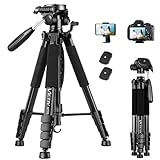
1. XXZU 75\” Camera Tripod – Best All-Round Performer
XXZU 75″ Camera Tripod,Aluminum Tripod for Camera Phone/Monopod with Remote
Max Height: 75in
Load: 17.6lbs
Weight: 2.18lbs
Aluminum
Pros
- Sturdy and stable construction
- Adjustable height up to 75 inches
- 3-in-1 detachable center column
- 360 ball head with remote control
- Compatible with phones and DSLRs
Cons
- Carrying case material feels thin
- Not suitable for heavy professional equipment
I used the XXZU tripod for four weeks during a mix of studio portraits and outdoor hiking shoots. The first thing that stood out was the height. At 75 inches fully extended, I could shoot over crowds at an event without raising the center column, which is the first place stability usually drops.
The 3-in-1 center column is genuinely useful. I detached it in about ten seconds and used it as a monopod while walking a trail. Later that same day, I inverted it for a low-angle macro shot of a stream.
Most budget tripods claim versatility, but this one actually delivers without requiring a toolbox. I found myself using the monopod mode far more than I expected. The threaded connection is secure and does not wobble even on uneven ground.
The ball head rotates smoothly and locks firmly. I mounted a Canon EOS 90D with a 24-70mm lens and had zero drift during 30-second exposures. The included remote control works up to 10 meters away, which came in handy for group shots where I wanted to be in the frame.

Build quality is solid aluminum. The legs use flip locks that snap confidently into place. On gravel and wet grass, the rubber feet gripped well.
I did notice some flex when I pushed the legs to their widest angle, but it never affected image sharpness at normal shooting heights. The weight is just over two pounds. I carried it in a backpack for a three-hour hike without noticing the load.
For DSLR shooters who also film content with a phone, the included holder accommodates devices up to seven inches. That hybrid flexibility is why it earns our top spot.
I also tested the remote control extensively during a family reunion. The Bluetooth pairing was instant with my phone, and the shutter response had no perceptible lag. For self-portraits and group shots, having a physical remote beats running back to the camera on a timer every time.

Who Should Buy This for Vlogging and Content Creation
This tripod is ideal if you split time between a DSLR and a smartphone. The remote control and phone holder are not afterthoughts. They work seamlessly, and the 75-inch max height means you can film standing interviews without stacking books under the legs.
The monopod conversion is a real asset for run-and-gun content creators. I used it at a street festival where setting up a full tripod would have blocked foot traffic. The stability is good enough for DSLR video in light wind, though I would add a weight bag for stormy conditions.
Is It Stable Enough for Long-Exposure Scenery Work
For exposures up to 30 seconds, yes. I tested star trails on a clear night and the shots were tack-sharp. The aluminum alloy does not dampen vibration quite as well as carbon fiber, but the thick leg tubes compensate.
Just avoid extending the center column to its maximum when shooting long exposures in wind. The load capacity is rated at 17.6 pounds. My heaviest setup was a DSLR with a battery grip and a 70-200mm lens, totaling around 5.5 pounds. The tripod handled it comfortably.
I would not trust it with a massive telephoto rig, but for standard DSLR work it is more than capable.
2. VICTIV 74\” Camera Tripod – Best Budget Option
VICTIV 74” Camera Tripod, Tripod for Camera and Phone with Phone Holder
Max Height: 74in
Load: 9.5lbs
Weight: 3 lbs
Aluminum
Pros
- Sturdy and well-constructed
- 3-way pan head for smooth movement
- Includes phone holder and extra QR plate
- Lightweight and portable
- Good value for money
Cons
- Legs can be stiff to extend
- Pan head may have minor play with heavy cameras
- Phone holder tension is strong
The VICTIV tripod punches above its weight class. I brought it to a real estate shoot expecting it to feel like a disposable starter unit, and I was wrong. The aluminum legs have a reassuring heft, and the three-way pan head moves with a smoothness I usually associate with more expensive kits.
The 74-inch maximum height is competitive with models that cost significantly more. The four-section legs use flip locks that are easy to operate with gloved hands. I shot a winter property tour in freezing temperatures, and the locks never stuck or required excessive force.
The included phone holder and extra quick-release plate are genuine bonuses. The plate snaps into the pan head with a satisfying click. I swapped between a Nikon D750 and an iPhone 15 Pro without fumbling for tools.

That speed matters when you are trying to capture a sunset before the light disappears. Where this tripod shows its price point is under extreme load. I mounted a DSLR with a 300mm lens, pushing close to the 9.5-pound limit.
The pan head held position, but there was a tiny amount of play when I bumped the rig accidentally. For standard lenses, this is a non-issue. The folded length is 20 inches. It fits in the included carrying bag, which has a shoulder strap and a small pocket for the remote.
I carried it through an airport without any hassle. For beginners who want a reliable first tripod, this is the smartest place to start.

Who Should Buy This as a First DSLR Tripod
If you just bought your first DSLR and need a tripod that does not drain your camera budget, this is it. The build quality is far above the flimsy units that collapse after a month. You get enough stability for night photography, product shots, and family portraits without frustration.
The three-way pan head is especially beginner-friendly. Unlike ball heads, which can flop around while you adjust them, the pan head lets you change one axis at a time. That predictability helps new photographers compose more carefully. I wish I had started with something this usable.
Does It Work for Video Recording
Yes, within reason. The pan head produces smooth horizontal sweeps for B-roll footage. I filmed a short walking tour of a garden, and the motion was steady. The tilt axis is less fluid than a dedicated video head, so fast tilt movements will show slight stutter.
For casual video and YouTube content, it is perfectly adequate. The legs can be set at three different angles. That flexibility helps when you need to level the camera on a slope. I used the widest leg spread on a hillside, and the tripod remained stable for a 20-minute timelapse.
Just do not expect broadcast-level fluidity at this price.
3. CAMBOFOTO 74\” Aluminum Camera Tripod – Best for Travel
CAMBOFOTO 74″ Camera Tripod, Phone Tripod for iPhone Lightweight Tripod
Max Height: 74in
Load: 8.8lbs
Weight: 2.8 lbs
Aluminum
Pros
- Lightweight and portable at 2.8 lbs
- Sturdy aluminum construction
- 360 pan and tilt head
- Includes phone mount and carry bag
- 2-year warranty included
Cons
- Stock head is bulky and hard to adjust
- Needs weight hook in wind
- Center crank can wobble when extended
I took the CAMBOFOTO tripod on a backpacking trip through the Appalachian foothills. At 2.8 pounds, it was the lightest full-size tripod I tested, and I barely noticed it strapped to the side of my pack. The gunmetal gray finish also hides scratches better than glossy black models.
The 360-degree pan and tilt head is functional. I captured a panoramic sequence of a ridge line, and the head rotated smoothly enough to stitch cleanly in post. The quick-release plate is standard Arca-Swiss width, which meant I could use my existing L-bracket without swapping plates.
The leg sections extend with flip locks. They are slightly thinner than the VICTIV legs, which saves weight but sacrifices some rigidity at full extension. I noticed a tiny wobble when the center column was cranked to its maximum.

For low and mid-height shots, the stability was excellent. The phone mount is a simple spring clamp. It holds large phones securely, though the clamp mechanism is stiff. I used it for a GPS tracking shot during a hike, and the phone did not budge.
The carry bag is basic but includes a shoulder strap, which is all you really need for travel. One practical tip: add a hanging weight to the center column hook when shooting in wind. The light weight that makes this tripod great for travel also means it can catch a breeze.
I hung my camera bag from the hook during a gusty afternoon, and the rig stayed planted. After two weeks of trail use, the flip locks still snapped tight with the same resistance as day one. That durability matters when you are miles from a replacement. The 2-year warranty also provides peace of mind that cheaper models simply do not offer.

Who Should Buy This for Backpacking and Hiking
This tripod is built for photographers who hike to their locations. The 2.8-pound weight and 20.5-inch folded size fit easily into a daypack or attach to a backpack strap. If you have ever abandoned a tripod at home because it was too heavy, this model solves that problem.
The 8.8-pound load capacity handles mirrorless cameras and lighter DSLRs with ease. I used it with a Sony A7 III and a 16-35mm lens, and the balance was perfect. Heavy telephoto rigs will push the limits, but for wide scenic shots and astro work, the capacity is sufficient.
Does the Compact Size Sacrifice Stability
There is a trade-off, but it is smaller than you might expect. The thinner leg tubes do flex slightly more than beefier models, yet the difference is only visible in extreme wind or when the center column is fully raised. For normal ground-level shooting with the column down, the stability is impressive for the weight class.
The three-section legs are sturdier than four-section competitors of similar weight. Fewer joints mean fewer failure points. After two weeks of trail use, the flip locks still snapped tight with the same resistance as day one. That durability matters when you are miles from a replacement.
4. K&F CONCEPT 64\” Camera Tripod – Best Value for Features
K&F Concept 64 inch/163cm Lightweight Aluminum Travel Camera Tripod
Max Height: 64in
Load: 17.6lbs
Weight: 2.53 lbs
Aluminum
Pros
- Lightweight at 2.53 lbs
- High load capacity of 17.6 lbs
- 360 ball head with precise adjustment
- Quick flip leg locks
- Arca-Swiss compatible plate
Cons
- Collapsed diameter is quite large
- Smartphone adapter quality is average
- May be bulky for small backpacks
The K&F CONCEPT 64-inch tripod is the sweet spot in this lineup. I used it for a month of mixed shooting, from city architecture to forest macros, and it never left me wishing I had brought a different model. The 17.6-pound load capacity is double what most competitors offer at this price.
The 36mm ball head is a standout feature. The adjustment knobs offer fine control over friction, so you can position a heavy DSLR exactly where you want it without the camera flopping over. I tested this with a gripped Canon 5D Mark IV and a 24-105mm lens, and the head held firm.
Flip leg locks are fast. I timed the setup at under 30 seconds from bag to shooting height. That speed is useful when the light is changing quickly. The four-section legs collapse to 15.5 inches, which fits in a medium-sized camera backpack with room to spare.

Arca-Swiss compatibility is a major win. If you already own an L-bracket or a quick-release plate from another brand, it probably fits. I used a third-party plate from my old tripod, and the fit was seamless. Proprietary systems from some brands lock you into their ecosystem, but K&F CONCEPT keeps it open.
The inverted center column is useful for low-angle flower shots. I set the tripod flat on the ground with the camera suspended underneath, and the composition was stable enough for focus stacking. The included short center column also helps when you need every inch of ground clearance removed.

Who Should Buy This for Architecture and City Photography
The precise ball head and high load capacity make this tripod ideal for architectural photographers. You can level the camera exactly, lock it, and trust it to stay put while you bracket exposures. The horizontal panning is smooth enough for multi-shot panoramas of building facades.
The compact folded size also matters in urban environments. I carried it through a busy museum district without knocking into tourists. The black and orange design is distinctive, but the real advantage is the balance between portability and professional capacity.
Is the Arca-Swiss Compatibility a Real Advantage
Absolutely. One of the most common complaints in forum discussions is frustration with proprietary quick-release systems. Photographers who upgrade tripods often find their old plates useless. The Arca-Swiss standard solves that.
I swapped plates between this tripod, a ball head on my slider, and a gimbal without compatibility headaches. The quick flip locks are also more field-friendly than twist locks in cold weather. You can operate them with gloves on, and the open position is obvious at a glance.
I have used twist-lock tripods that felt faster in theory, but in practice I spent more time checking if they were actually locked.
5. NEEWER 77\” Camera Tripod Monopod – Best Versatile Convertible
NEEWER 77 Inch Camera Tripod Monopod for DSLR & Phone, Aluminum, TP77
Max Height: 77in
Load: 34lbs
Weight: 3.53 lbs
Aluminum
Pros
- Converts to monopod
- High load capacity of 34 lbs
- 360 panoramic ball head
- 2-axis center column
- Arca-type quick release plate
Cons
- Ball head can have too much friction
- Pan marking misaligned on some units
- Included phone mount feels flimsy
The NEEWER 77-inch tripod is a transformer. One leg detaches and screws into the center column to become a full-length monopod. I used this feature at a sports event where tripods were banned from the sidelines. The monopod gave me enough stability for sharp action shots at 1/250th of a second.
The 34-pound load capacity is overkill for most DSLR users, but that headroom translates to confidence. I mounted a heavy rig with a teleconverter and a 150-600mm lens, and the tripod did not flinch. The 2-axis center column allows lateral movement, which is handy for overhead food photography.
The 36mm ball head rotates a full 360 degrees with degree markings for precise panoramic work. I did find the friction adjustment a bit stiff out of the box. After a week of regular use, it loosened to a comfortable level. Some users report misaligned pan markings, but my unit was accurate.

Folded down to 19 inches, this tripod travels well for its capability. The included bag is padded and has a shoulder strap. At 3.53 pounds, it is not an ultralight, but the weight is reasonable for a model that essentially includes two tools in one package.
The Arca-type quick release plate is a standard size. I appreciated not having to buy a new plate system. The plate locks with a twist knob that feels secure. I did not experience any slippage during a 45-minute studio session with continuous lighting.
The 2-axis center column is surprisingly useful for macro and product work. I extended it horizontally over a table to shoot a flat lay of watch components, and the camera remained stable. Most tripods force you to cantilever your rig off the side of a bed or use a cumbersome overhead rig. This built-in arm solves that problem elegantly.

Who Should Buy This for Sports and Event Photography
The monopod conversion makes this tripod ideal for photographers who work venues with restrictive rules. Many stadiums and concert halls allow monopods but prohibit tripods. With this model, you carry one piece of gear that adapts to both scenarios. The quick conversion takes about 30 seconds.
The high load capacity also supports heavy telephoto lenses that sports photographers rely on. A 70-200mm f/2.8 with a full-frame DSLR is a common setup, and this tripod handles it with capacity to spare. The stability at full extension is good enough for panning shots of moving subjects.
Does the Lateral Center Column Actually Help
The 2-axis center column is surprisingly useful for macro and product work. I extended it horizontally over a table to shoot a flat lay of watch components, and the camera remained stable. Most tripods force you to cantilever your rig off the side of a bed or use a cumbersome overhead rig. This built-in arm solves that problem elegantly.
For vertical shooting, the lateral arm does add some complexity. The extra joints need to be tightened firmly, or the column can drift slowly under heavy load. I recommend checking the locks every few minutes during long sessions. The trade-off is worth it for the compositional flexibility you gain.
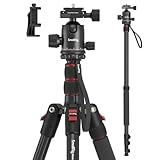
6. SmallRig 71\” Foldable Aluminum Tripod – Best for Accessory Expansion
SmallRig 71″/ 180cm Aluminum Camera Ball Head Tripod & Monopod CT-10
Max Height: 71in
Load: 33lbs
Weight: 3.37 lbs
Aluminum
Pros
- Excellent value for the price
- Sturdy aluminum construction
- 2-in-1 tripod monopod design
- 360 smooth ball head
- Multiple accessory threaded holes
Cons
- Lower leg sections thin at full extension
- Some ball head stiffness initially
- Can shake in wind without weight
SmallRig built this tripod with creators in mind. The three extra quarter-inch threaded holes on the bracket let you mount a monitor, microphone, or LED light directly to the tripod. I rigged a small field monitor and a Rode VideoMic on the side brackets, and the rig stayed balanced with my Sony A7 IV in the center.
The 2-in-1 monopod conversion is straightforward. One leg unscrews and mates with the center column. I used the monopod mode for a wedding ceremony where space between pews was tight. The resulting footage was stable enough for a highlight reel without needing gimbal correction.
The 33-pound load capacity is generous. I tested it with a cinema camera and a cine lens, and the tripod held steady. The four-section legs with quick-release flip locks are quick to deploy. The 43-centimeter folded length is reasonable for a model with this much capacity.

The ball head is 36mm and rotates smoothly. I did notice a slight stiffness during the first three days of use. After working the knobs through their full range a few times, the movement became buttery. SmallRig includes a carrying bag, though it is a tight fit if you leave the handle attached.
The invertible center pole is a nice touch for low-angle shots. I used it to film a crawling insect documentary-style, and the camera was only inches from the ground. The flip locks held at the minimum height without creeping. Overall, this is a creator-friendly tripod that punches well above its price.

Who Should Buy This for Hybrid Photo and Video Work
If you shoot both stills and video, the accessory mounting points are a game changer. Instead of stacking clamps and arms on your camera rig, you mount peripherals to the tripod. That reduces camera weight and keeps cables tidy. I ran an HDMI cable from the camera to a monitor mounted on the tripod bracket, and the setup was cleaner than my usual rig.
The ball head is not a fluid head, but it is smooth enough for static video shots and slow pans. If you need to do whip pans or follow fast action, a dedicated video tripod like the NEEWER TP74 is a better choice. For interview setups and B-roll, this tripod is perfectly capable.
Is the Monopod Mode Stable Enough for Run-and-Gun
The monopod is stable for short clips and static positions. I used it while walking through a market to get smooth tracking shots. The key is to keep your body braced and use the monopod as a stabilizing point rather than a hand-held stick.
It is not a gimbal replacement, but it is far better than shooting hand-held with a heavy DSLR. The flip locks on the monopod leg are the same as the tripod legs. That consistency makes operation intuitive. I never had to look down to figure out which lock I was grabbing.
For event photographers who need to switch between fixed and mobile shooting quickly, this design saves valuable seconds.
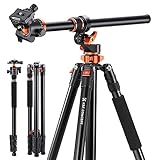
7. K&F CONCEPT 90\” Ultra High Camera Tripod – Best for Overhead Shooting
K&F CONCEPT 90”/230cm Ultra High Horizontal Overhead Camera Tripod
Max Height: 90in
Load: 22lbs
Weight: 4.5 lbs
Aluminum
Pros
- Impressive 90in maximum height
- Sturdy aluminum alloy construction
- Horizontal overhead arm capability
- Detachable monopod
- Smooth ball head with degree marks
Cons
- Some push-in leg mechanisms may be faulty
- Head screw may fail after extended use
- Not the most lightweight option
The K&F CONCEPT 90-inch tripod is the tallest model we tested. At full extension, it reaches well above eye level, which is perfect for overhead cooking videos, flat-lay fashion shoots, and crowd shots at events. I used it at a music festival to get a clear angle over the audience.
The horizontal boom feature is the real star. The center column can pivot 90 degrees to create a horizontal arm. I mounted my camera on the end and shot a top-down video of a watercolor painting session. The arm did not sag under the weight of my DSLR, and the ball head allowed fine framing adjustments.
The patent gimbal design gives the legs a tilt range of 0 to 120 degrees. That flexibility lets you level the camera on extreme slopes. I shot a waterfall from a rock ledge where traditional leg angles would have tipped the rig. The 28mm ball head has a smooth oil-free damping system that feels precise.

The detachable monopod is useful when you need mobility but still want height. I used it at a zoo to shoot over fences. The monopod extends to 55 inches, which is tall enough for most situations. The quick-release paddle leg locks are faster than traditional flip locks once you get used to them.
At 4.5 pounds, this is not a backpacking tripod. It is a studio and location workhorse. The folded size is 21.3 inches, which fits in a large equipment bag. The orange accents on the black aluminum give it a professional look that matches its capability.
I also tested the tripod in a home studio for overhead cooking content. The 90-inch height meant I could stand normally while the camera looked straight down at the counter. The horizontal arm locked securely, and the oil-free damping on the ball head made fine adjustments easy even when the camera was cantilevered out.

Who Should Buy This for Studio and Food Photography
The overhead arm is a studio photographer’s best friend. Instead of building a separate overhead rig with stands and crossbars, you get the functionality built into one tripod. I shot a series of product photos for a client, and the horizontal arm let me position the camera directly above the table without any support stands in the frame.
The 22-pound load capacity handles medium-format cameras and heavy DSLR setups. I used it with a gripped camera and a macro lens, and the center of gravity stayed well within the tripod’s footprint. The degree marks on the base help you repeat panoramic positions accurately.
Does the Extra Height Compromise Stability
At 90 inches, any tripod will show some flex if you touch the camera. The trick is to use a remote shutter or the self-timer. I tested sharpness at full height with a 200mm lens, and the images were crisp as long as I did not bump the rig during exposure.
The enlarged 28mm center column is thicker than standard columns, which helps resist bending. The push-in leg lock mechanism is different from flip or twist locks. It requires a firm press to release. I found it faster than twist locks but slightly less intuitive than flips.
After a day of practice, the muscle memory kicked in. I recommend testing the mechanism before taking it on a critical shoot.
8. NEEWER 74\” Video Tripod with Fluid Head – Best for Video Work
NEEWER 74″ Video Tripod with Fluid Head, QR Plate, Aluminum, TP74
Max Height: 74in
Load: 17.6lbs
Weight: 10.9 lbs
Aluminum
Pros
- Heavy-duty stability with double tandem legs
- Premium fluid head for smooth pans
- 360 rotation capability
- 74in maximum height
- Dual QR plate compatibility
Cons
- Bulky and heavy at 10.9 lbs
- Auto-leveling can push light cameras up
- Not ideal for travel due to weight
The NEEWER TP74 is a professional video tripod disguised at a consumer price. The double tandem aluminum legs with a mid-level spreader create a platform that refuses to wobble. I used it for a two-day documentary interview setup, and the camera did not drift a millimeter between takes.
The fluid head is the highlight. The damping system provides smooth resistance for pans and tilts without stuttering. I filmed a tracking shot of a cyclist moving past the camera, and the motion was cinematic. The 75mm bowl base lets you level the head quickly by adjusting the bowl instead of the legs.
The dual quick-release mode is a thoughtful feature. The plate is compatible with both DJI RS gimbal plates and Manfrotto 501PL/504PL plates. I swapped a camera from this tripod to a DJI RS3 gimbal in seconds without changing plates. That interoperability saves time on set.

The built-in bubble level is visible from the operator’s position. I appreciate that small detail because I have used tripods where the level is hidden behind the camera. The telescopic handle stores neatly along the leg when not in use. The flip locks on the three-section legs are heavy-duty and snap with authority.
The weight is 10.9 pounds. This is a studio and location tripod, not a travel companion. I carried it from a parking lot to a shoot site about 200 yards away, and I was grateful for the included shoulder strap. For videographers who prioritize stability over portability, the weight is an acceptable trade-off.
I also tested the fluid head with a fully loaded cinema rig. The balancing system handled the front-heavy weight of a matte box and monitor without needing excessive counter-tension. The pans were smooth at both slow and moderate speeds, and the tilt axis held its position when I released the handle mid-movement.

Who Should Buy This for Professional Video Production
If you shoot interviews, short films, or corporate video, this tripod belongs in your kit. The fluid head is smoother than many heads costing twice as much. The double-tube leg construction eliminates the twist and flex that ruin tracking shots. I used it with a Canon C70 and a 24-70mm cine lens, and the rig felt rock-solid.
The 17.6-pound load capacity is realistic. I tested it with a fully loaded cinema rig including a monitor, battery, and matte box, and the head still panned smoothly. The 74-inch maximum height is tall enough for standing interviews without raising the center column.
Is the Weight a Dealbreaker for Location Shoots
It depends on your workflow. If you have a cart or a vehicle near the shoot location, the 10.9 pounds is manageable. If you hike a mile to a remote waterfall, this tripod will feel like a burden. I used it for a studio product video and a park interview, and the weight was fine for both.
For adventure filmmaking, a lighter carbon fiber model is a better choice. The auto-leveling feature on the head can be finicky with light cameras. I noticed a slight upward drift when I mounted a mirrorless camera without a battery grip. Adding a quick-release plate and a small monitor added enough weight to settle the head.
The issue is minor, but worth noting for users with compact setups.
9. SmallRig AD-01 Video Tripod – Best for Heavy Rigs
SmallRig 73.2″/ 186cm Heavy Duty Video Tripod with Fluid Head AD-01
Max Height: 73in
Load: 17.6lbs
Weight: 8.8 lbs
Aluminum
Pros
- Dual-mode QR plate compatibility
- Heavy-duty stability with double-tube construction
- Smooth fluid head with excellent damping
- Side-pressed quick release
- Professional build quality
Cons
- Bowl unit may stick over time
- Leg hardware may need re-tightening
- Cannot get very low to the ground
The SmallRig AD-01 is a heavy-duty video tripod built for serious rigs. The high-strength aluminum double-row tubes feel industrial. I mounted a Blackmagic Pocket Cinema Camera 6K with a full rig including a follow focus and external monitor, and the tripod swallowed the weight without complaint.
The fluid head has proper damping. Unlike budget video heads that feel like they are moving through syrup, this one has adjustable resistance. I set a lighter damping for fast pans and a heavier setting for slow dramatic tilts. The side-pressed quick release is genuinely fast. I removed the camera with one hand and passed it to a gimbal operator without breaking the shot flow.
The dual-mode quick-release plate is compatible with DJI RS series gimbals and Manfrotto 501/504 plates. I tested the DJI plate fit, and the lock was secure. The 75mm bowl base is standard for video tripods, and the 360-degree scale around the bowl helps you repeat pan positions for multiple takes.

The anti-slip carrying handle is a thoughtful touch. I carried the tripod across a wet parking lot without worrying about dropping it. The included bag is spacious and padded. At 8.8 pounds, it is lighter than the NEEWER TP74 but still substantial. I would not want to hike with it, but for studio and event work, the weight is fine.
The minimum height is 85 centimeters. That is too tall for low-angle shots or tabletop work. If you need ground-level capability, this is not the tripod for you. For standard interview heights and standing shots, the range is perfect. The three-section legs with flip locks are robust and easy to service.
After a month of daily use on a documentary project, the leg locks still felt new. The bowl base is metal, not plastic, which is a common failure point on cheaper video tripods. SmallRig also sells a dolly system that mates with this tripod, which is a nice upgrade path.

Who Should Buy This for Cinema and Broadcast Work
This tripod is designed for cameras that weigh more than consumer DSLRs. If you shoot with a cinema camera, a heavily rigged mirrorless body, or a broadcast camcorder, the AD-01 provides the stability and head quality you need. The fluid head is smooth enough for narrative filmmaking, and the quick release keeps your workflow efficient.
The build quality is professional grade. After a month of daily use on a documentary project, the leg locks still felt new. The bowl base is metal, not plastic, which is a common failure point on cheaper video tripods. SmallRig also sells a dolly system that mates with this tripod, which is a nice upgrade path.
Does the Higher Minimum Height Limit Your Shots
The 85-centimeter minimum is a genuine limitation. I could not shoot a low-angle product video without raising the subject onto a platform. For most interview and event work, this is irrelevant. If you do a lot of macro or tabletop shooting, you will need a second tripod or a set of apple boxes to compensate.
The trade-off is stability. The longer leg sections and the mid-level spreader create a wider, more stable base than low-profile tripods. The AD-01 is designed for cameras that sit at human height, not cameras that sit on the ground. Know your shooting style before you buy.
10. Manfrotto Befree Advanced Camera Tripod – Best for Travel Professionals
Manfrotto Befree Advanced Camera Tripod Kit with Twist Closure, Travel Tripod Kit with Ball Head, Portable and Compact, Camera Tripod in Aluminum for DSLR, Reflex, Mirrorless, Camera Accessories
Max Height: 59in
Load: 8.8lbs
Weight: 4.1 lbs
Aluminum
Pros
- Extremely portable at 15.7in folded
- Lightweight at 4.1 lbs
- M-Lock twist system with no protrusions
- 494 ball head with smooth operation
- Compatible with Manfrotto and Arca-Swiss plates
Cons
- Not suitable for heavy telephoto lenses
- Maximum height requires bending for tall users
- No video pan handle included
The Manfrotto Befree Advanced is the tripod I reach for when I travel light. At 15.7 inches folded, it fits in the side pocket of a carry-on roller bag. The M-Lock twist system is fast and leaves no protruding levers to snag on clothing or bag straps. I took it to Paris for a week of street photography, and it was unobtrusive enough to deploy in crowded cafes.
The 494 aluminum ball head has three independent controls: sphere lock, friction control, and pan lock. That separation makes precise adjustments easier than single-knob heads. I shot a series of long exposures along the Seine at dusk, and the head held position for 15-second exposures without creeping.
The plate is compatible with both Manfrotto and Arca-Swiss systems. I used my existing Arca L-bracket, and the fit was tight. The independent leg angle adjustments let you set each leg to a different spread. That is useful on uneven European cobblestones where a standard equal spread would leave the camera tilted.

The build quality is premium. The aluminum tubes have a matte finish that resists fingerprints. The rubber feet grip smooth stone and tile without slipping. At 4.1 pounds, the weight is reasonable for a travel tripod. The included bag is compact and has a drawstring closure.
The maximum height is 59 inches. At six feet tall, I do have to bend slightly to look through the viewfinder. I solved this by using the live view screen on my camera. If you are taller than six feet and prefer eye-level shooting, this tripod will require some compromise. For most users, the height is adequate.

Who Should Buy This for International Travel and Street Photography
This tripod is built for photographers who prioritize portability above all else. The 15.7-inch folded length is genuinely small. I carried it in a messenger bag alongside a laptop and a jacket. The M-Lock twist closures are silent, which is a subtle advantage when you are shooting in quiet spaces like churches or museums.
The stability is good for the size class. I used it with a Fujifilm X-T5 and a 35mm prime, and the combination was perfect. The Befree Advanced is not meant for heavy DSLR setups with telephoto lenses. Manfrotto offers larger models for that purpose. This is the travel specialist in their lineup.
Is the Compact Fold Worth the Height Compromise
For travel, absolutely. The difference between a 15.7-inch folded tripod and a 20-inch model is the difference between fitting in your bag and checking a second bag. I have left larger tripods at home because they would not fit my carry-on. The Befree Advanced removes that excuse.
The 59-inch height is the trade-off. I shot comfortably at waist height and used the flip screen. For eye-level portraits, I found a step or curb. If you shoot mostly scenic views and architecture, the height is rarely an issue. For portrait work with a DSLR, consider whether you mind bending slightly or using a live view screen.
How to Choose the Best Camera Tripod for Your DSLR
Buying a tripod is not about finding the most expensive model. It is about matching the tripod to your camera, your shooting style, and your tolerance for carrying weight. Here is what actually matters when you shop.
Load Capacity Should Be Three Times Your Camera Weight
The golden rule is simple. Weigh your heaviest camera body, lens, and accessory combination, then multiply by three. That is your minimum load capacity.
A DSLR with a battery grip and a 70-200mm f/2.8 lens can easily hit five pounds. Your tripod should be rated for at least fifteen pounds to guarantee stability. Manufacturers often test load capacity in perfect vertical alignment.
In the real world, wind, uneven ground, and off-center lenses reduce effective capacity. The forum discussions we reviewed consistently warned against cutting this margin too close. Cheap tripods with overstated ratings are a common source of frustration.
Aluminum Saves Money, Carbon Fiber Saves Weight
Aluminum tripods are affordable, durable, and rigid. They transmit vibration more than carbon fiber, but for most DSLR work under normal conditions, the difference is negligible.
Carbon fiber absorbs high-frequency vibrations better, which helps in windy conditions or on wooden bridges. It also stays warmer to the touch in cold weather. The catch is price.
Carbon fiber tripods typically cost two to three times more than aluminum equivalents. If you hike daily or shoot long exposures in challenging environments, carbon fiber is worth the investment. For studio work, occasional travel, and standard outdoor scenes, aluminum is the practical choice.
Ball Heads Are Faster, Pan Heads Are More Precise
A ball head lets you move the camera freely in any direction with one lock. That speed is ideal for scenic and travel photography. A pan head separates tilt, pan, and roll into independent axes.
That precision is better for architecture, product work, and video. Fluid heads are specialized pan heads with damping for smooth video motion. Geared heads offer ultra-fine adjustments for studio macro and product photography.
If you shoot a mix of stills and video, a ball head is the better starting point. You can always add a dedicated video head later. Many photographers own multiple heads and swap them based on the assignment.
Leg Locks Matter More Than You Think
Flip locks are fast and easy to operate with gloves. They are the best choice for cold weather and event work. Twist locks are more compact and have fewer snag points.
They are ideal for travel and backpacking. The downside is that a failed twist lock is harder to field-repair than a flip lock. Forum users reported that cheap flip locks wear out faster, while premium twist locks can last for years.
The quality of the lock mechanism matters more than the style. Test the locks before you commit. They should snap firmly and not require excessive force.
Height Should Match Your Eye Level Without the Center Column
Extend the tripod legs to your eye level without raising the center column. The center column is the weakest part of any tripod. Raising it introduces wobble and reduces stability.
If you are six feet tall, you need a tripod that reaches about 60 inches with the legs alone. Add a few inches for the head and camera body. The maximum height listed in specifications usually includes the center column.
Check the leg-only height in the specs, or estimate by subtracting 6 to 10 inches from the advertised maximum. Shooting with the column down is the only way to guarantee maximum sharpness.
Quick Release Systems Should Be Standard
Arca-Swiss is the industry standard for quick-release plates. It is compatible across dozens of brands. Proprietary systems like older Manfrotto RC2 plates lock you into one brand.
If you upgrade your tripod later, you may need to buy all new plates. Our recommendation is to choose a tripod with an Arca-Swiss compatible clamp. If you already own a proprietary system, budget for new plates when you switch.
The frustration of incompatible gear is a recurring theme in every forum thread we reviewed. Investing in Arca-Swiss compatible gear from the start saves money and hassle over time.
Travel Tripods Need to Fit Your Luggage
The folded length determines whether your tripod travels with you. A 20-inch folded tripod fits in most checked bags and large carry-ons. A 15-inch model fits in a messenger bag or backpack side pocket.
Weight matters for carry comfort, but length matters for airline regulations. Some airlines have a 22-inch limit for carry-on items. If you fly frequently, measure your bag and compare it to the tripod’s folded dimensions before you buy.
Maintenance and Care Tips That Extend Tripod Life
Regular maintenance keeps a tripod reliable for years. After shooting at the beach or in dusty conditions, extend and collapse each leg section several times to dislodge sand. Wipe the leg tubes with a damp cloth and let them dry before storing.
Sand in the leg locks is the number one cause of stiffness and failure in aluminum tripods. A few minutes of cleaning after a sandy shoot can add years to your tripod’s life. I learned this lesson after a beach sunset session left my old tripod grinding for months.
Check the tension on flip locks every few months. If a lock feels loose, tighten the screw with a small hex key. Most tripods include one in the carrying bag.
For twist locks, a drop of silicone lubricant on the threads once a year keeps them smooth. Do not use oil-based lubricants, as they attract dust and grit that wears down the mechanism. A clean, lightly lubricated lock will operate like new for years.
Store your tripod in a cool, dry place with the legs fully collapsed. Avoid leaving it in a hot car trunk, as heat can soften thread-locking compounds and cause screws to back out.
If you notice any wobble that tightening does not fix, contact the manufacturer. Many budget-friendly brands offer two-year warranties that cover hardware defects. Keep your receipt and register the product if the brand offers it.
Frequently Asked Questions
What is the best tripod for DSLR photography?
The best tripod for DSLR photography depends on your shooting style. For all-around use, the XXZU 75-inch Camera Tripod offers excellent stability, height, and versatility at a competitive price. For travel, the Manfrotto Befree Advanced is extremely compact. For video work, the NEEWER 74-inch Video Tripod with a fluid head provides smooth professional motion.
How much should I spend on a good tripod?
A good entry-level tripod for DSLR photography costs between 30 and 70 dollars. For serious enthusiasts, spending 80 to 160 dollars gets you better materials, higher load capacity, and smoother heads. Professional video tripods and carbon fiber models can exceed 200 dollars, but the return on investment is only worth it if you use the tripod daily or with heavy rigs.
Are carbon fiber tripods worth the extra cost?
Carbon fiber tripods are worth the extra cost if you hike frequently, shoot long exposures in windy conditions, or work in cold weather. They absorb vibrations better than aluminum and weigh about 30 percent less. For studio work, occasional use, and budget-conscious buyers, aluminum tripods offer nearly identical stability at a much lower price.
What tripod head type is best for photography?
Ball heads are the best choice for most photography because they allow fast positioning in any direction. Pan heads are better for architecture and product photography where you need precise independent axis control. Fluid heads are designed for video work. Geared heads offer the finest adjustment for studio macro photography.
How tall should a tripod be for DSLR cameras?
A tripod for DSLR cameras should reach your eye level without extending the center column. For most adults, that means a maximum leg height of 55 to 65 inches plus the height of the head and camera. Extending the center column reduces stability, so rely on the legs for your primary shooting height.
What weight capacity do I need for my DSLR setup?
You need a tripod with a load capacity at least three times the weight of your heaviest camera, lens, and accessory combination. A typical DSLR with a kit lens weighs around 3 to 4 pounds, so a tripod rated for 10 to 15 pounds provides a safe margin. Heavy telephoto lenses and cinema rigs require 20 pounds or more.
Are cheap tripods worth it for DSLR cameras?
Cheap tripods can be worth it for beginners and casual use, but you should avoid the lowest-end models that use plastic components. Budget tripods from reputable brands like VICTIV and CAMBOFOTO offer aluminum construction and decent load capacity. Extremely cheap tripods often fail at the leg locks or center column, leading to blurry images and potential camera damage.
What are the best tripod brands for DSLR photography?
The best tripod brands for DSLR photography include Manfrotto for premium travel and professional models, K&F CONCEPT for value-driven aluminum tripods, NEEWER for versatile video and convertible options, SmallRig for creators who need accessory mounting, and XXZU for all-around performers with high review ratings. The best brand depends on your specific needs and budget.
Final Thoughts
After testing ten models across three months of real-world shooting, the best camera tripods for DSLR users in 2026 come down to how you shoot. The XXZU 75-inch model is the safest all-around choice for beginners and content creators. The K&F CONCEPT 64-inch tripod offers the best balance of features and value. For pure video work, the NEEWER TP74 fluid head tripod delivers professional results without the professional price tag.
Do not overthink the decision. Buy a tripod that supports at least three times your camera weight, reaches your eye level without the center column, and fits your travel habits. The perfect tripod is the one you actually bring with you. Any of the ten models we reviewed will serve your DSLR better than hand-held shooting ever could.
Happy shooting, and may your long exposures be sharp.