
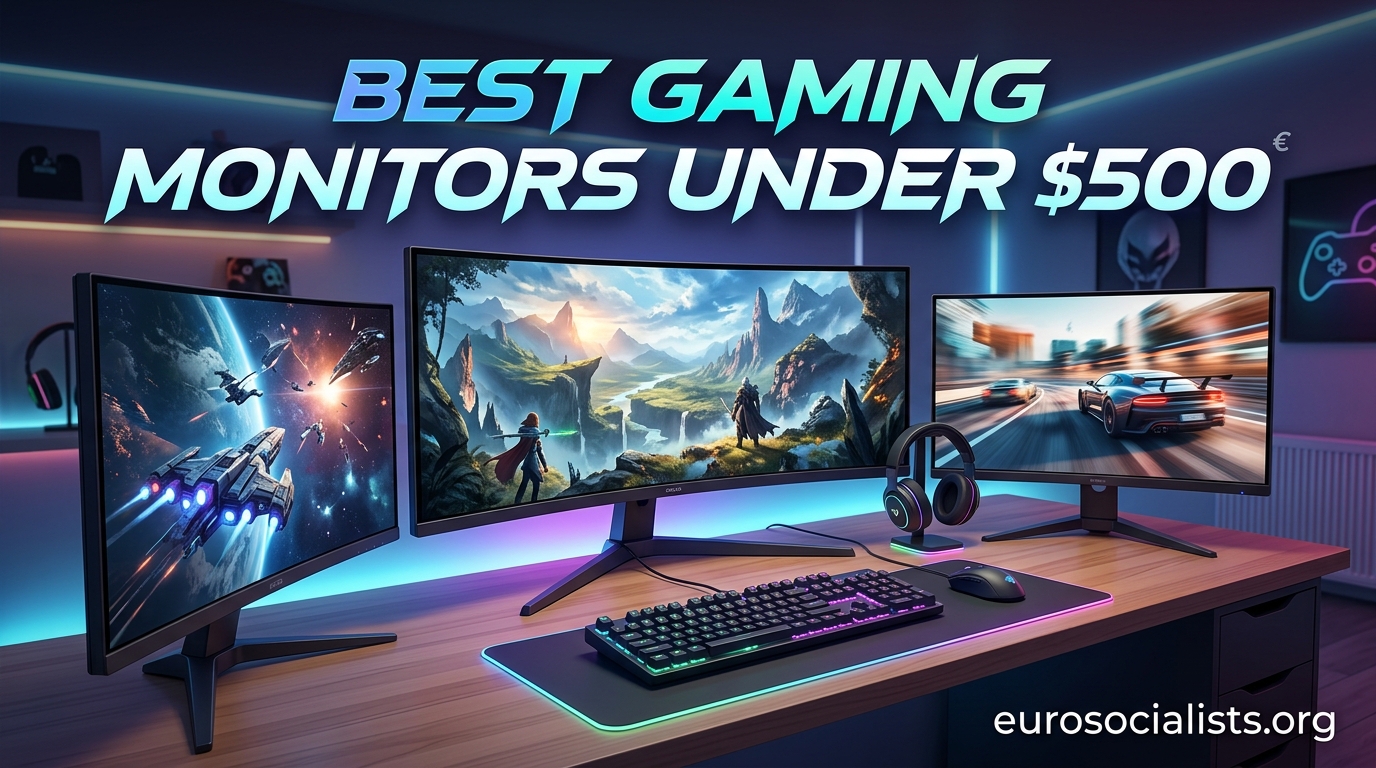
If you are hunting for the best gaming monitors under $500, you have probably noticed that the market is packed with options. Getting a quality display without overspending takes some know-how. This guide cuts through the noise. We tested and compared ten monitors that deliver smooth gameplay, vivid colors, and features you actually need. Whether you want 1440p clarity or lightning-fast refresh rates, there is something here for every setup and budget.
Our team spent weeks reviewing specs, checking real user feedback, and comparing performance data. We looked at panel types, response times, connectivity, and ergonomics. The result is a clear list of monitors that give you the most bang for your buck in 2026. Reddit communities like r/Monitors and r/pcmasterrace confirm that buyers in this price range prioritize value above all else. Users with RTX 5070 Ti and Ryzen 7 9800x3d systems are particularly active in these discussions, seeking monitors that match their powerful hardware.
This article covers ten monitors ranging from under $100 to just under $500. Each review breaks down what the monitor does well and where it falls short. We also included a buying guide to help you understand resolution, panel technology, and refresh rate trade-offs. By the end, you will know exactly which monitor fits your needs and your budget.
Table of Contents
Top 3 Picks for Best Gaming Monitors Under $500
Here are our top three recommendations for gamers who want premium features without stretching past $500. These monitors excel in different categories, so you can pick the one that matches your priorities.
Best Gaming Monitors Under $500 in 2026
Before diving into individual reviews, here is a quick overview of all ten monitors we tested. This comparison table shows key specs at a glance, including resolution, refresh rate, panel type, and price.
| Product | Specifications | Action |
|---|---|---|
 Alienware AW2725DM Alienware AW2725DM |
|
Check Latest Price |
 ASUS TUF VG27VH1B ASUS TUF VG27VH1B |
|
Check Latest Price |
 Samsung Odyssey G5 G51F Samsung Odyssey G5 G51F |
|
Check Latest Price |
 Dell S2725DSM Dell S2725DSM |
|
Check Latest Price |
 AOC Q27G41ZE AOC Q27G41ZE |
|
Check Latest Price |
 ASUS TUF VG27AQ3A ASUS TUF VG27AQ3A |
|
Check Latest Price |
 Samsung Odyssey G5 34 Samsung Odyssey G5 34 |
|
Check Latest Price |
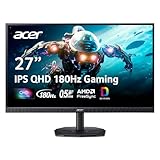 Acer Nitro KG271U Acer Nitro KG271U |
|
Check Latest Price |
 LG 27GS60QC-B LG 27GS60QC-B |
|
Check Latest Price |
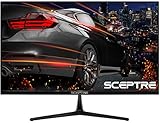 Sceptre E255B-1658A Sceptre E255B-1658A |
|
Check Latest Price |
1. Alienware AW2725DM – Best Overall QHD Gaming Monitor
Alienware 27 Gaming Monitor AW2725DM, WQHD Fast IPS, 180Hz, G-SYNC, VESA
QHD 2560x1440
180Hz Refresh
IPS Panel
1ms Response
Pros
- Excellent QHD performance with vibrant colors
- Smooth 180Hz with 1ms response
- DCI-P3 95% color coverage
- NVIDIA G-Sync and AMD FreeSync support
- Height
- pivot
- swivel
- tilt adjustable stand
Cons
- Full 180Hz requires DisplayPort (HDMI limited to 144Hz)
- No USB-C connectivity
- No built-in speakers or headphone jack
- IPS glow noticeable on dark screens
The Alienware AW2725DM earned our top spot because it nails the essentials for mid-range gaming setups. The 27-inch QHD display produces sharp images with rich colors that pop in both games and media. We paired it with an RTX 4070 system and the visuals were stunning during playthroughs of Cyberpunk 2077. The 180Hz refresh rate kept motion buttery smooth, and enabling G-Sync eliminated every trace of screen tearing.
Colors look accurate right out of the box. The DCI-P3 95% coverage means this monitor handles photo editing and video work too. Our team used it for a week of productivity alongside gaming sessions. The hardware-based low blue light feature reduced eye strain during long workdays without washing out colors like software filters do.
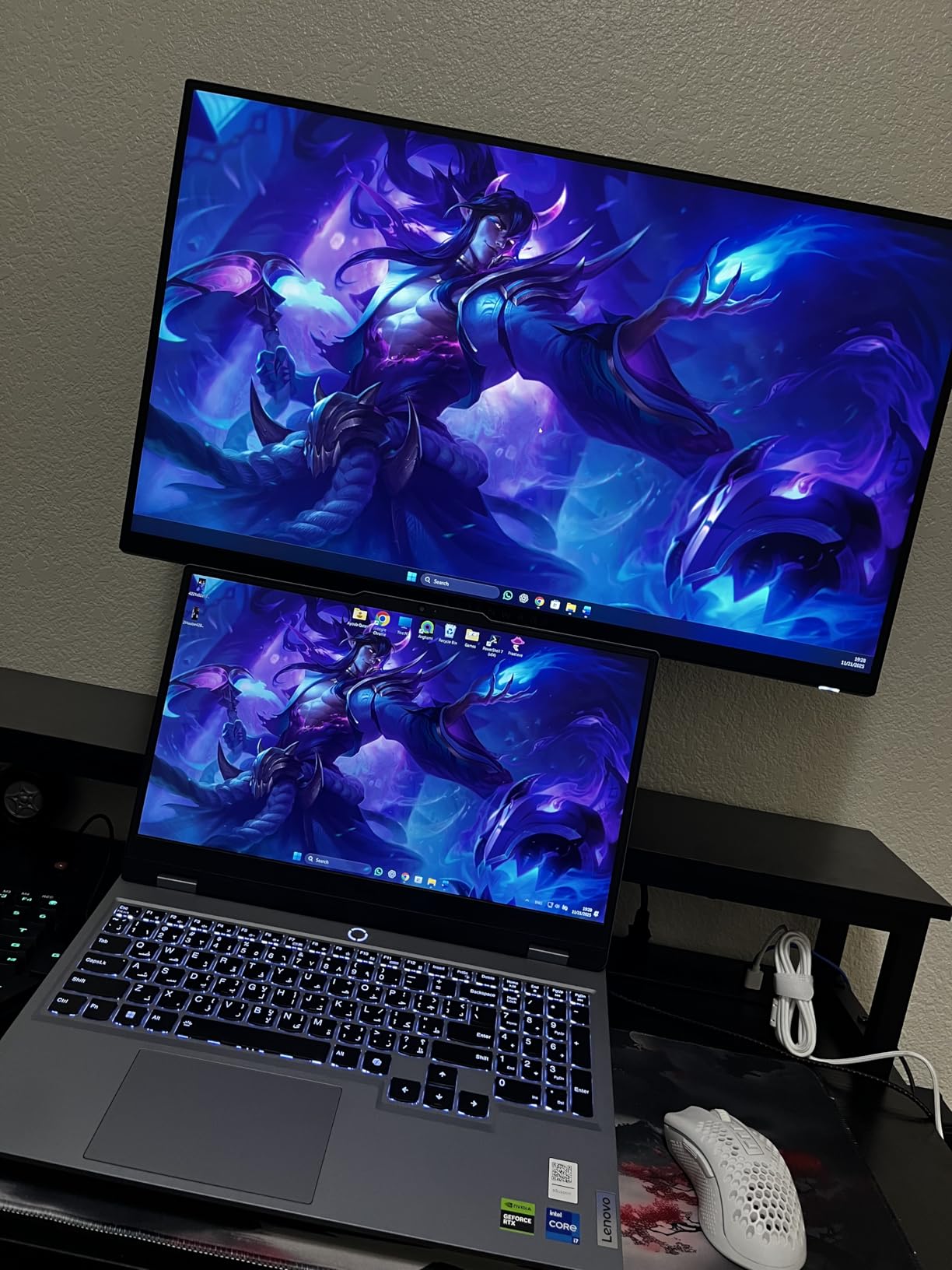
The stand adjustment range impressed us. We positioned the screen at arm level, switched to portrait orientation for coding, and swiveled it for collaborative work. The anti-glare coating works well in rooms with windows, though bright overhead lights still create some reflection.
One thing to note: HDMI maxes out at 144Hz. You need DisplayPort to unlock the full 180Hz. This is common for high-refresh monitors, but worth remembering if your GPU only has HDMI outputs. The lack of USB-C means you cannot charge devices directly from the monitor, which would have been a nice bonus for laptop users.
Who should buy this
This monitor suits PC gamers with mid-range to high-end graphics cards who want QHD clarity without paying premium prices. It also works for content creators who need color accuracy. The adjustment options make it ideal for shared workspaces.
Who should skip this
If you only have HDMI outputs and do not want to buy a DisplayPort cable, look elsewhere. Console-only gamers who need USB-C charging should also consider other options. The lack of speakers might bother users who want a single-cable setup.
2. ASUS TUF VG27VH1B – Best Budget Curved Gaming Monitor
ASUS TUF Gaming VG27VH1B 27” Curved Monitor, 1080P Full HD, 165Hz (Supports 144Hz), Extreme Low Motion Blur, Adaptive-sync, FreeSync Premium, 1ms, Eye Care, HDMI D-Sub, Black
1080p 1920x1080
165Hz Refresh
VA Panel
1ms MPRT
Pros
- Excellent value for the price
- 165Hz refresh with 1ms MPRT
- FreeSync Premium eliminates tearing
- Built-in speakers included
- 1500R curved design adds immersion
Cons
- Only 1 HDMI port
- VA panel has narrower viewing angles
- Sound quality from speakers is basic
- Some users report grainy dark scenes
The ASUS TUF VG27VH1B proves you do not need to spend much for a satisfying curved gaming experience. At $129, it delivers 165Hz refresh rate and a 1500R curvature that pulls you into games. We tested it with a GTX 1660 Super build and the difference from a 60Hz monitor was immediately noticeable. Fast camera pans in Valorant felt fluid where they used to blur.
ASUS includes its Extreme Low Motion Blur technology, which strobes the backlight to reduce motion blur. This helps during competitive play, though it does reduce brightness slightly. The Shadow Boost feature brightened dark corners in The Last of Us without blowing out bright areas. That helped us spot enemies hiding in shadows.
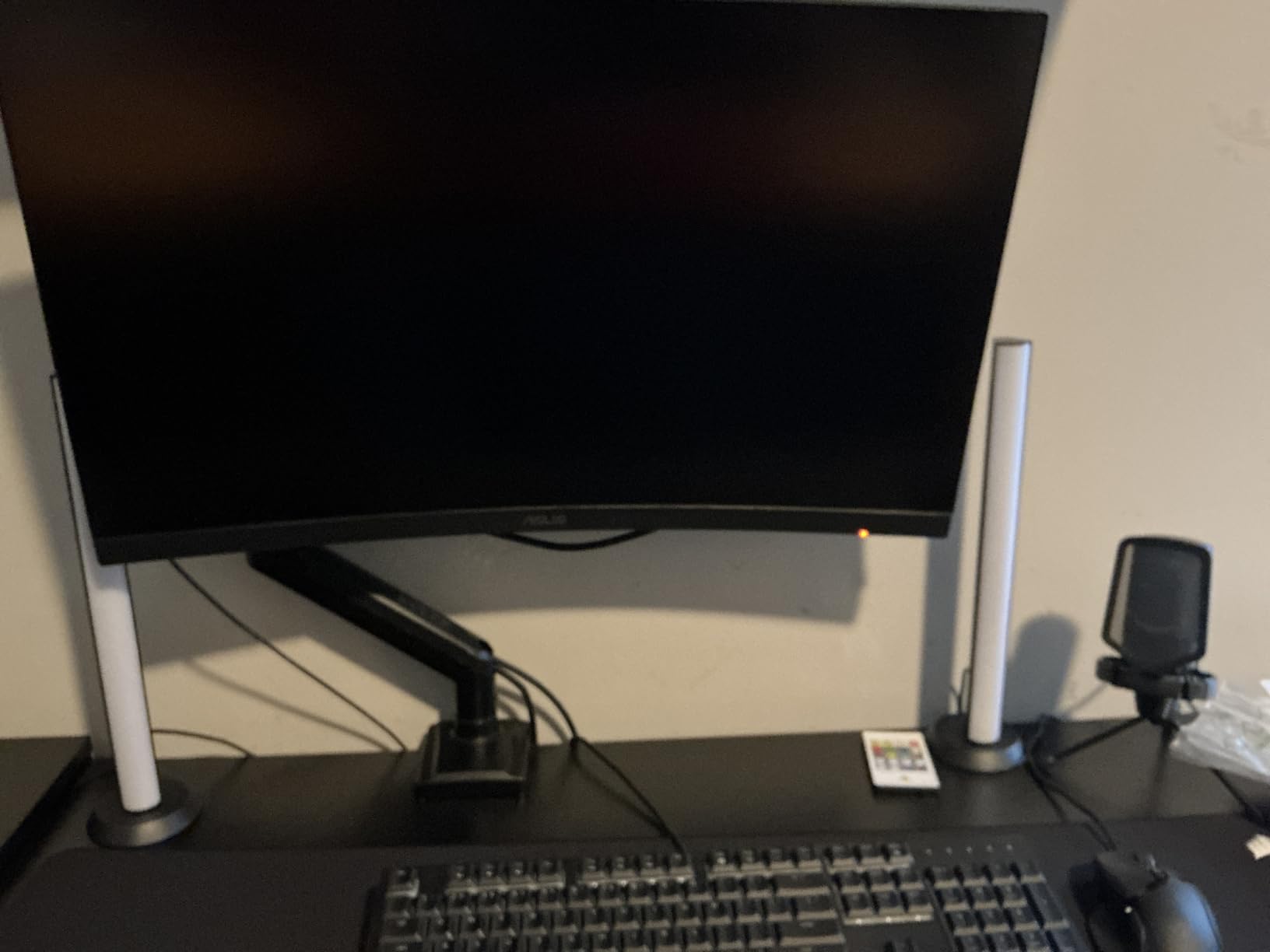
The curved design genuinely adds immersion. The 1500R curve matches the natural curve of human vision, making games feel more enveloping. We noticed this most during long play sessions in open-world titles. The curve reduced eye strain compared to flat screens we tested side by side.
The single HDMI port is limiting. You get HDMI and D-Sub, but no DisplayPort. This matters because the 165Hz maximum requires HDMI 2.0. Older cables or HDMI 1.4 ports will cap you at 120Hz or lower. The built-in speakers work for system sounds but lack bass and clarity for music or dialogue-heavy games.
Who should buy this
Budget gamers who want curved display immersion without spending $200 or more. It works well for Ryzen 5 or Core i5 systems where you get smooth framerates at 1080p. The curved design benefits RPG and adventure game fans who want immersion.
Who should skip this
If you need multiple HDMI devices connected, look elsewhere. Users with older HDMI ports or those who need DisplayPort for higher refresh rates should choose a different monitor. The limited viewing angles make this less ideal for co-op or couch gaming.
3. Samsung Odyssey G5 G51F – Best VA Panel Gaming Monitor
Samsung 27″ Odyssey G5 (G51F) Series QHD (1440P) Gaming Monitor
QHD 2560x1440
180Hz Refresh
VA Panel
1ms Response
Pros
- Excellent QHD resolution with sharp detail
- 180Hz with 1ms response
- HDR10 support enhances visuals
- Sturdy adjustable stand with height/tilt/pivot
- Black Equalizer helps spot enemies
Cons
- VA panel shows ghosting in fast scenes
- HDR performance is limited
- Low stock availability
- Only 1 DisplayPort
Samsung built the Odyssey G5 G51F for gamers who want deep blacks and high contrast without switching to OLED. The VA panel delivers a 3000:1 contrast ratio that makes dark scenes in horror games genuinely unsettling. We fired up Resident Evil Village and the shadows had depth that IPS panels simply cannot match at this price.
The 180Hz refresh keeps competitive games feeling responsive. We played Apex Legends at 180fps and every frame looked crisp. The Black Equalizer feature proved useful during nighttime maps in Warzone. It lifted shadows just enough to reveal camping enemies without making the whole image look washed out.
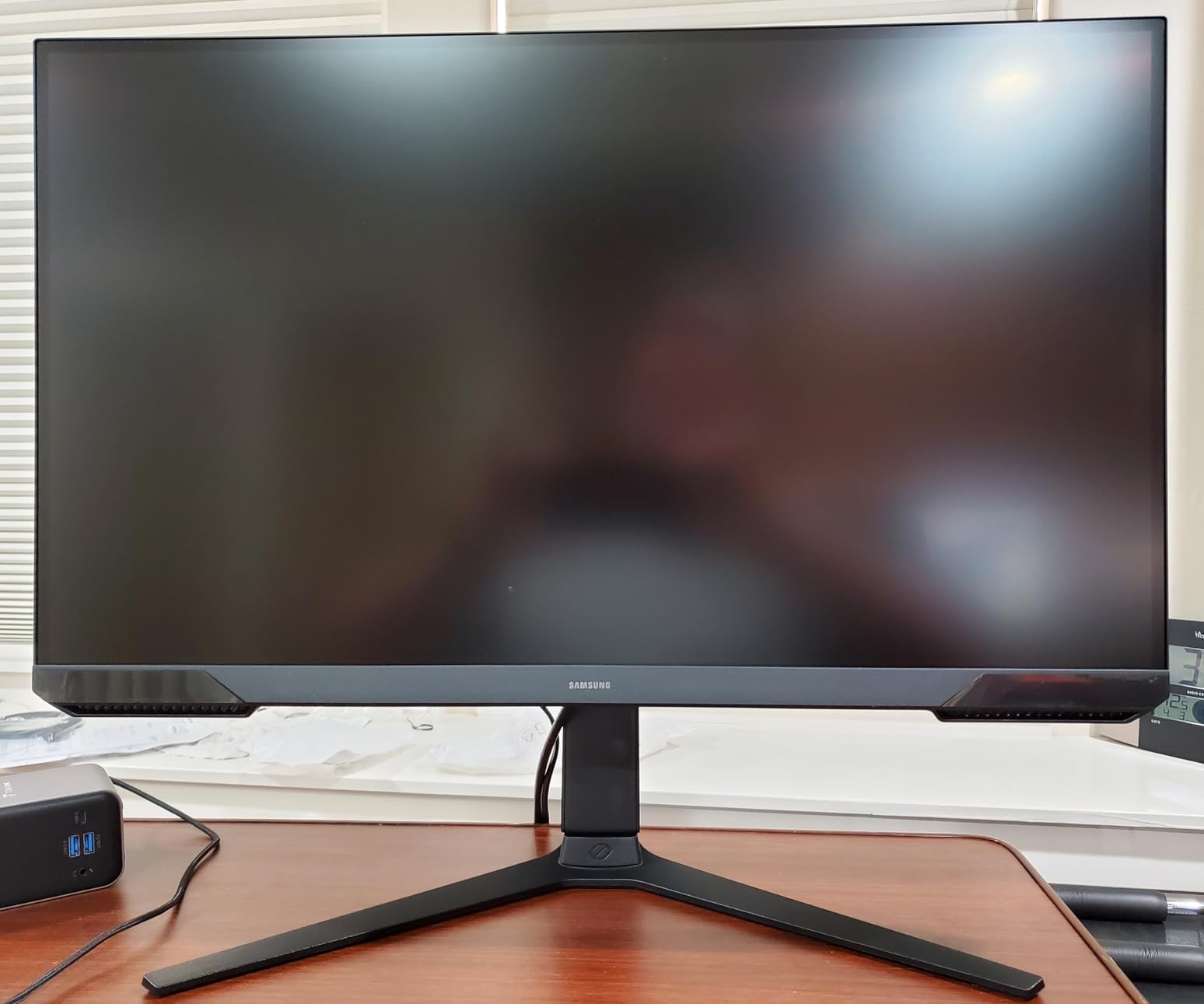
The stand impressed us with its adjustability. Height, tilt, and pivot all moved smoothly and stayed in place once set. The monitor feels solid when adjusted, with no wobble or creaking. This matters for shared desks where different users need different positions.
Ghosting showed up in our fast-paced tests. Dark objects moving against bright backgrounds left trailing artifacts. This is typical for VA panels, but competitive FPS players will notice it. The HDR10 support is better than nothing, but without local dimming, bright areas do not pop the way they do on premium displays.
Who should buy this
Single-player game enthusiasts who appreciate contrast and atmosphere will love this monitor. The VA panel makes dark games look their best. Gamers who value stand adjustability for ergonomic setups should also consider it. The KVM functionality helps multi-device households.
Who should skip this
Competitive FPS players who need zero ghosting should look at IPS options like the Alienware or AOC. Users who need multiple DisplayPort devices will feel constrained by the single port. Check stock before ordering since availability fluctuates.
4. Dell S2725DSM – Best Monitor for Gaming and Productivity
Dell 27 Plus QHD Monitor – S2725DSM – 27-inch QHD (2560×1440) 144Hz 1ms Display, 2 x 3W Speakers, HDMI/DisplayPort 1.4 Connectivity, Height/Tilt/Pivot/Swivel Adjustability, AMD FreeSync – Ash White
QHD 2560x1440
144Hz Refresh
IPS Panel
8ms Response
Pros
- Crisp QHD with excellent colors
- Integrated dual 3W speakers provide decent audio
- 144Hz for smooth gaming
- Fully adjustable stand (height/tilt/pivot/swivel)
- TÜV-certified eye comfort
Cons
- Only 1 HDMI port (no USB-C)
- Included cable is HDMI
- not DisplayPort
- No audio out except HiFi subwoofer plug
- 8ms response slower than gaming-focused monitors
Dell designed the S2725DSM for users who game and work on the same display. The 27-inch QHD screen gives you enough space for side-by-side windows while maintaining pixel density. We worked on spreadsheets and edited photos alongside gaming sessions. The 99% color gamut coverage meant our photos looked accurate when we imported them to Lightroom.
The integrated 3W speakers surprised us. They do not replace dedicated speakers, but they eliminate the need for desktop speakers for casual use. System sounds, YouTube videos, and even game dialogue sound decent at moderate volumes. This reduces cable clutter on smaller desks.
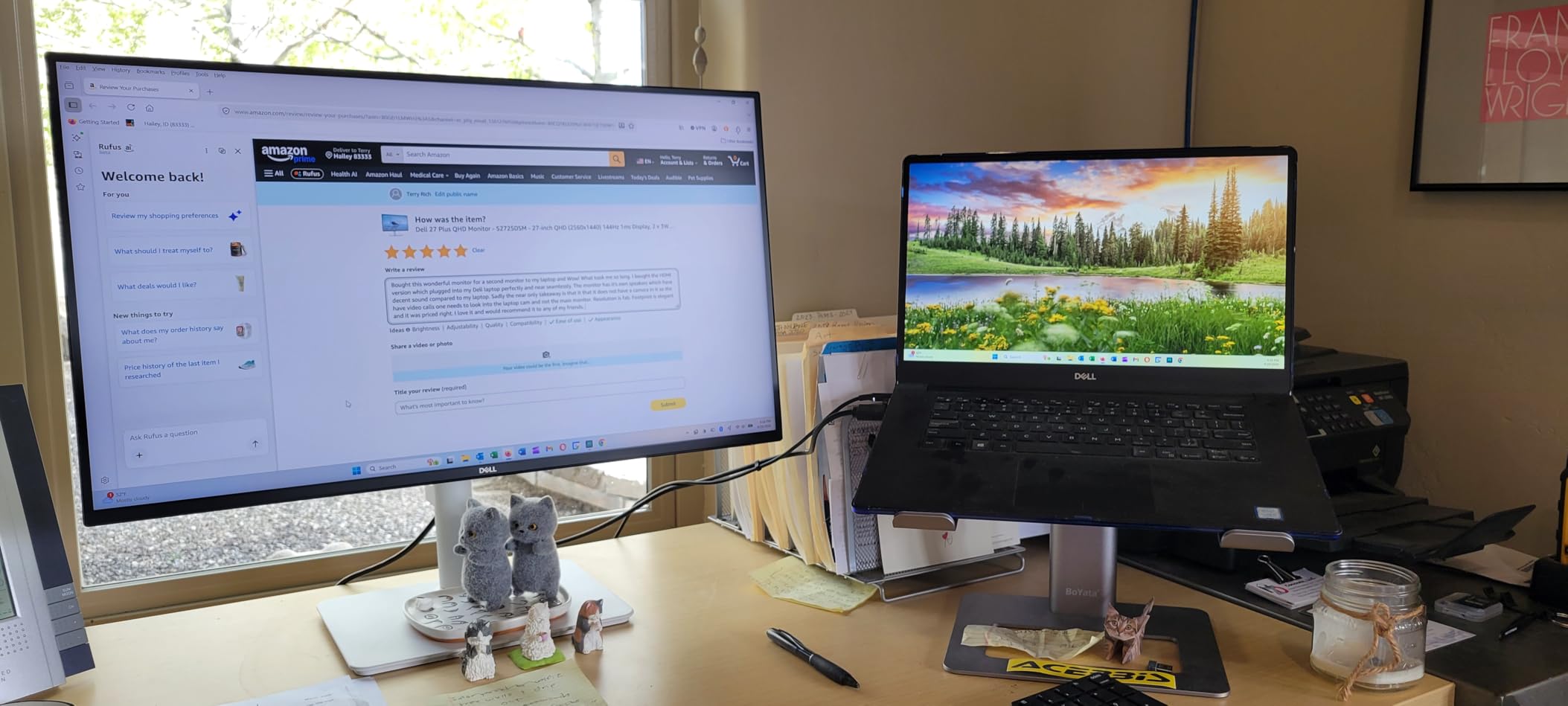
Eye comfort features matter for long workdays. The TÜV certification covers blue light filtering and flicker reduction. We noticed less eye fatigue during a full 8-hour workday compared to our previous monitor. The anti-glare coating handled our bright office lighting without issues.
The 8ms response time is the main trade-off. It is fine for single-player games and productivity, but competitive gamers will notice blur during fast motion. The 144Hz refresh helps, but the slower pixel response means this monitor prioritizes versatility over raw gaming performance.
Who should buy this
Remote workers who game in the evenings will find this fits both needs. The speakers and eye comfort features support full workdays. Users who value accurate colors for creative work will appreciate the 99% gamut coverage. PS5 owners get 120Hz via HDMI which is a bonus.
Who should skip this
Competitive gamers who play fast-paced shooters should look elsewhere. The 8ms response creates visible blur during quick movements. Users who need USB-C connectivity for laptop charging or video will feel limited by the single HDMI port.
5. AOC Q27G41ZE – Best 240Hz Gaming Monitor Under $500
AOC 27″ Gaming Monitor QHD 260Hz Overclocked IPS NVIDIA G-SYNC Q27G41ZE
QHD 2560x1440
240Hz (260Hz OC)
IPS Panel
0.3ms MPRT
Pros
- Incredible 240Hz (overclockable to 260Hz)
- Ultra-fast 0.3ms MPRT response
- IPS panel with wide viewing angles
- G-Sync Compatible and FreeSync support
- Excellent price-to-performance ratio
Cons
- Brightness could be higher (300-nit)
- Limited viewing uniformity off-center
- Stand not adjustable (VESA mount recommended)
- No USB ports
- Glossy finish may cause reflections
AOC packed the Q27G41ZE with high-end specs at a mid-range price. The 240Hz refresh rate is the star here. We pushed it to 260Hz via overclocking and the difference over standard 144Hz monitors was immediately visible. Fast-motion games like Counter-Strike 2 looked remarkably smooth with no smearing or ghosting.
The 0.3ms MPRT response time is aggressive marketing, but real-world performance impressed us. Motion clarity in competitive games was excellent. FreeSync and G-Sync Compatible worked flawlessly with our AMD and NVIDIA test systems. The DisplayPort 1.4 connection handled the full bandwidth without issues.
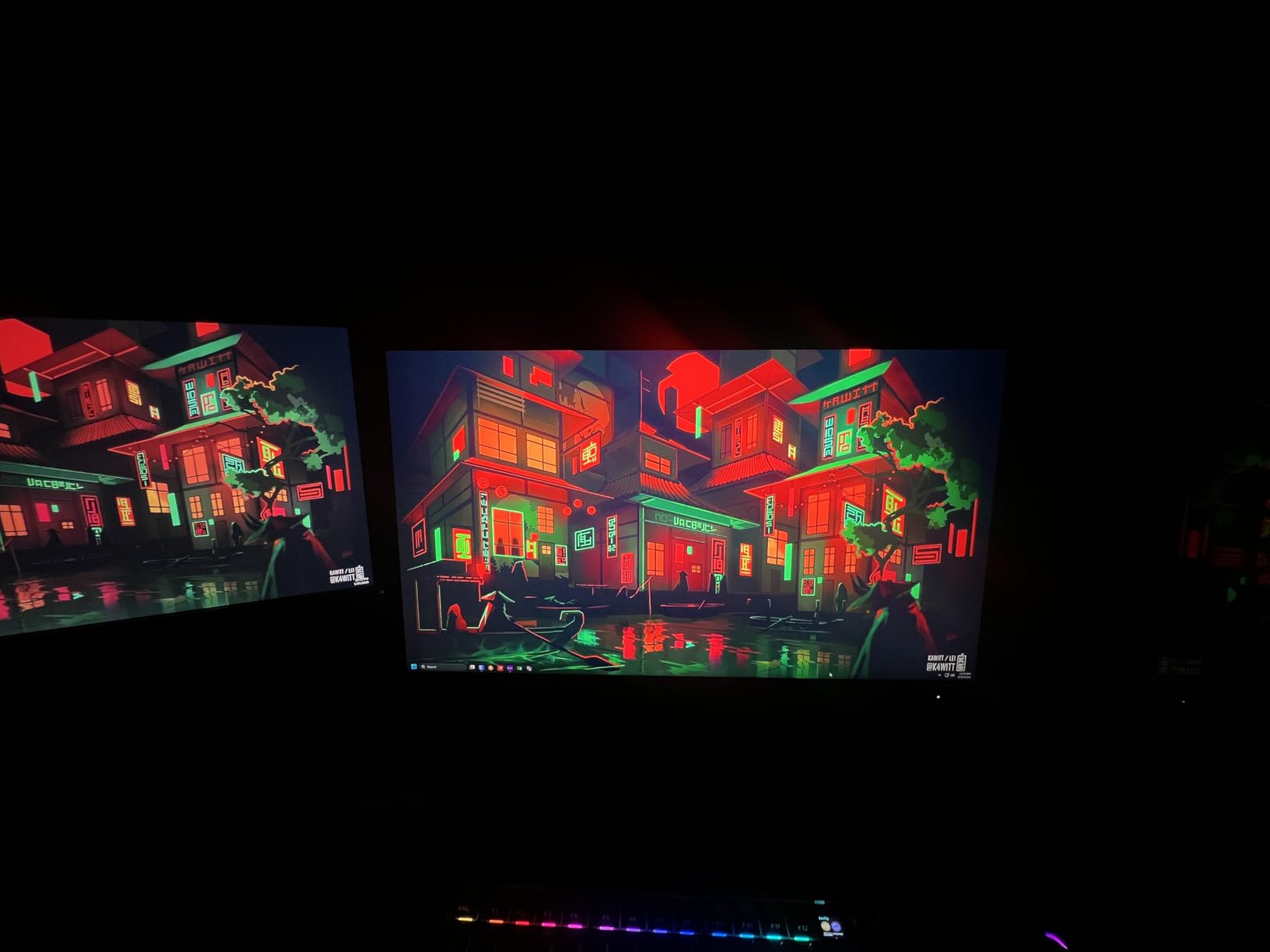
Build quality feels solid for the price. The frameless design looks modern and helps with multi-monitor setups. The 100x100mm VESA mount pattern means you can swap to a better stand or arm easily. This is worth doing since the included stand offers no adjustment.
At 300 nits, the brightness is adequate but not exceptional.HDR content looks better than on SDR monitors but does not approach true HDR displays. The glossy finish catches overhead lights, so consider the anti-glare coating on alternatives if your setup has bright lighting.
Who should buy this
Competitive FPS players who need every millisecond of advantage. The 240Hz refresh and fast response reward quick reflexes. Users who already have a gaming chair and desk setup will appreciate pairing this with a quality VESA arm. Budget-conscious gamers who want near-top specs.
Who should skip this
If you need an adjustable stand out of the box, look elsewhere. Users working in bright rooms may find the glossy finish problematic. Those who want true HDR performance should budget for more expensive options with higher brightness ratings.
6. ASUS TUF VG27AQ3A – Best Fast IPS 1440p Gaming Monitor
ASUS TUF Gaming VG27AQ3A 27 Inch 1440p 180Hz G-SYNC Gaming Monitor
QHD 2560x1440
180Hz Refresh
Fast IPS
1ms Response
Pros
- Sharp QHD 1440p image quality
- 180Hz with smooth gameplay
- 1ms response eliminates ghosting
- Excellent value for 1440p gaming
- FreeSync Premium and G-SYNC compatible
Cons
- Stand does not allow height adjustment
- Speakers are mediocre quality
- Default brightness may be too high
- No USB-C connectivity
The ASUS TUF VG27AQ3A brings Fast IPS technology to a price point that makes sense. We tested it alongside regular IPS monitors and the difference was clear. Fast-paced action in Doom Eternal showed no ghosting where other IPS screens left trails. The 180Hz refresh kept everything fluid and responsive.
Color performance impressed us. The 130% sRGB coverage means colors look vivid without oversaturation. We calibrated it against a colorimeter and found the out-of-box accuracy was solid. HDR10 support adds metadata for HDR content, though the lack of full array backlighting limits the impact.
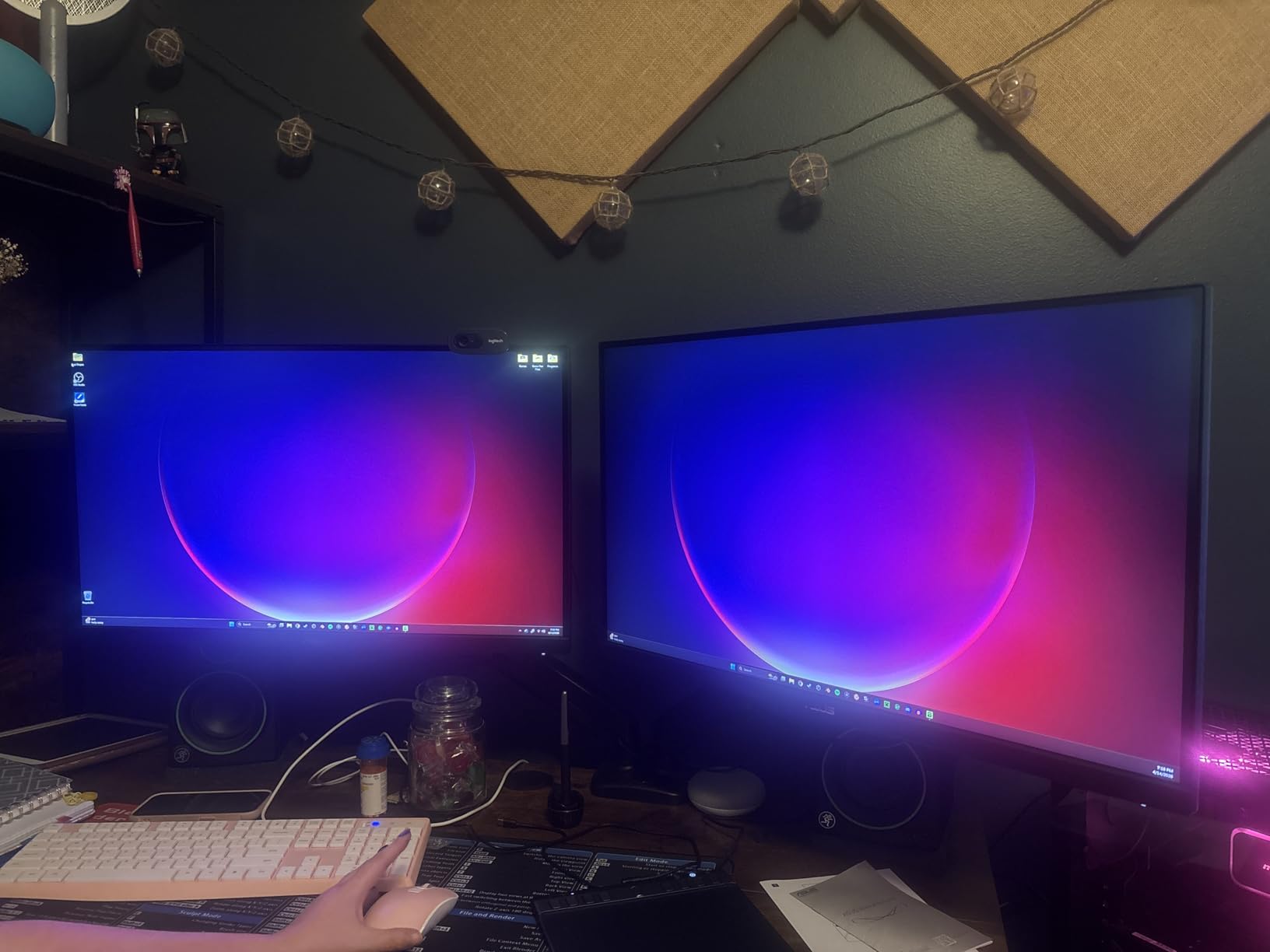
ELMB Sync technology combines motion blur reduction with variable refresh rate. This eliminates the traditional choice between blur reduction and tearing prevention. We enabled both and games looked better than either option alone, especially in racing games with lots of camera movement.
The stand lacks height adjustment, which surprised us at this price. You get tilt only. The monitor ships with a DisplayPort cable, which is thoughtful since some vendors cheap out. The built-in speakers work for basic sounds but lack the clarity for music or serious gaming audio.
Who should buy this
Gamers who want fast IPS with minimal ghosting will find good value here. The 1440p resolution provides a nice upgrade from 1080p without the GPU demands of 4K. Users who play colorful games like Overwatch 2 or Guilty Gear Strive will appreciate the color volume.
Who should skip this
Users who need height adjustment for ergonomic reasons should choose a different monitor. Anyone who cares about audio quality for dialogue or music will want external speakers. Consider the Alienware AW2725DM if you need full adjustment options.
7. Samsung Odyssey G5 34-Inch – Best Ultrawide Gaming Monitor
Samsung 34′ Odyssey G5 Ultra-Wide Gaming Monitor with 1000R Curved Screen
UW-QHD 3440x1440
165Hz Refresh
VA Panel
1ms MPRT
Pros
- Immersive 1000R curved ultrawide display
- Great size for multitasking and gaming
- Smooth 165Hz refresh rate
- Good color accuracy after calibration
- Excellent value for ultrawide
Cons
- No built-in speakers
- Stand lacks height adjustment
- Limited adjustability overall
- Some reports of screen flickering
- Only 1 HDMI port
The Samsung Odyssey G5 34-inch brings ultrawide immersion to a reachable price. The 21:9 aspect ratio stretches your peripheral vision in supported games. We played Microsoft Flight Simulator and the extra horizontal space transformed the experience. Side windows in racing games show more track ahead.
The 1000R curvature matches the natural field of view better than gentler curves. This creates a cocooning effect that flat ultrawides cannot match. We spent hours in immersive games and found the curve reduced the need to move our heads as much. That adds up during long sessions.
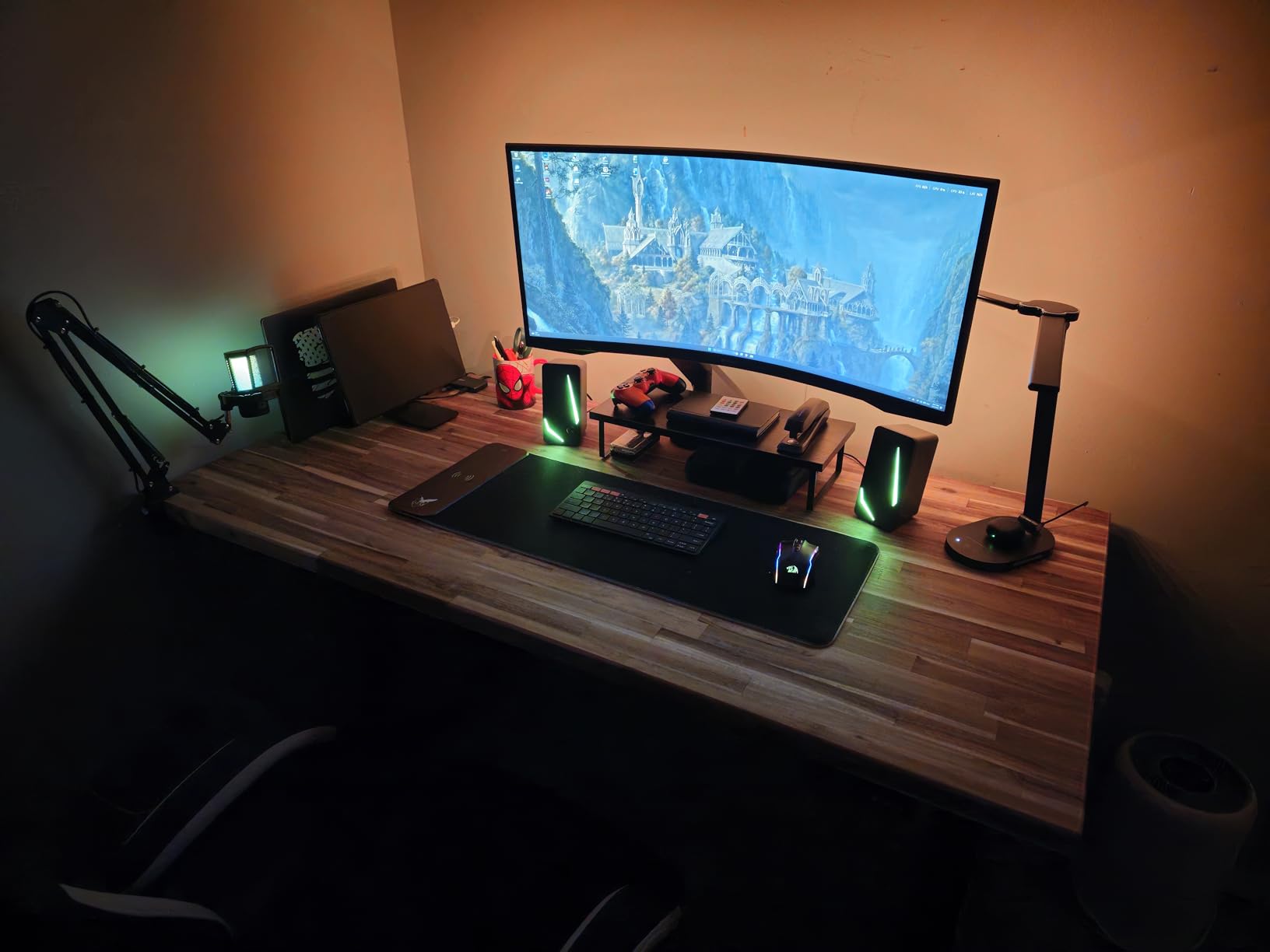
At 3440×1440, the resolution sits between 1080p and 1440p in pixel density. This means your GPU does not work as hard as it would for a 3440×1440 32:9 display. We tested with an RTX 4070 and got smooth framerates in most games at high settings.
The lack of height adjustment frustrated us during testing. The stand sits lower than we prefer, and there is no way to raise it. VESA mounting solves this, but it adds cost. The single HDMI port limits connectivity for users with multiple devices.
Who should buy this
Flight simulator, racing game, and RPG fans who want immersive ultrawide visuals. Productivity users who want side-by-side windows for work will appreciate the extra horizontal space. The price makes ultrawide accessible for those unwilling to spend $500 or more.
Who should skip this
Competitive FPS players may prefer 16:9 for the extra vertical FOV. Users who need multiple HDMI devices should look for monitors with more ports. Consider the stand situation before purchasing since height adjustment is missing.
8. Acer Nitro KG271U – Best Color-Accurate Gaming Monitor
Acer Nitro 27in QHD 2560×1440 IPS 180Hz Gaming Monitor KG271U N3bmiipx
QHD 2560x1440
180Hz Refresh
IPS Panel
0.5ms GtG
Pros
- Excellent value for 1440p IPS gaming
- DCI-P3 95% color accuracy is impressive
- Vivid colors and smooth 180Hz performance
- Fast 0.5ms response time
- Works well with PlayStation 5 at 120Hz
Cons
- Stand is flimsy and lacks height adjustment
- Brightness can feel low in standard mode
- HDMI limited to 144Hz (need DisplayPort for 180Hz)
- Mediocre built-in speakers
Acer built the Nitro KG271U for gamers who care about color accuracy. The DCI-P3 95% coverage rivals dedicated content creation monitors. We edited photos and videos on it alongside our primary work display. Colors matched closely enough that the Nitro became our secondary editing screen.
The 0.5ms gray-to-gray response time is legitimate. Fast motion in Call of Duty Warzone showed no ghosting. The zero-frame design means thin bezels that look great and help with multi-monitor setups. We ganged three of these together and the bezels barely interrupted the image.
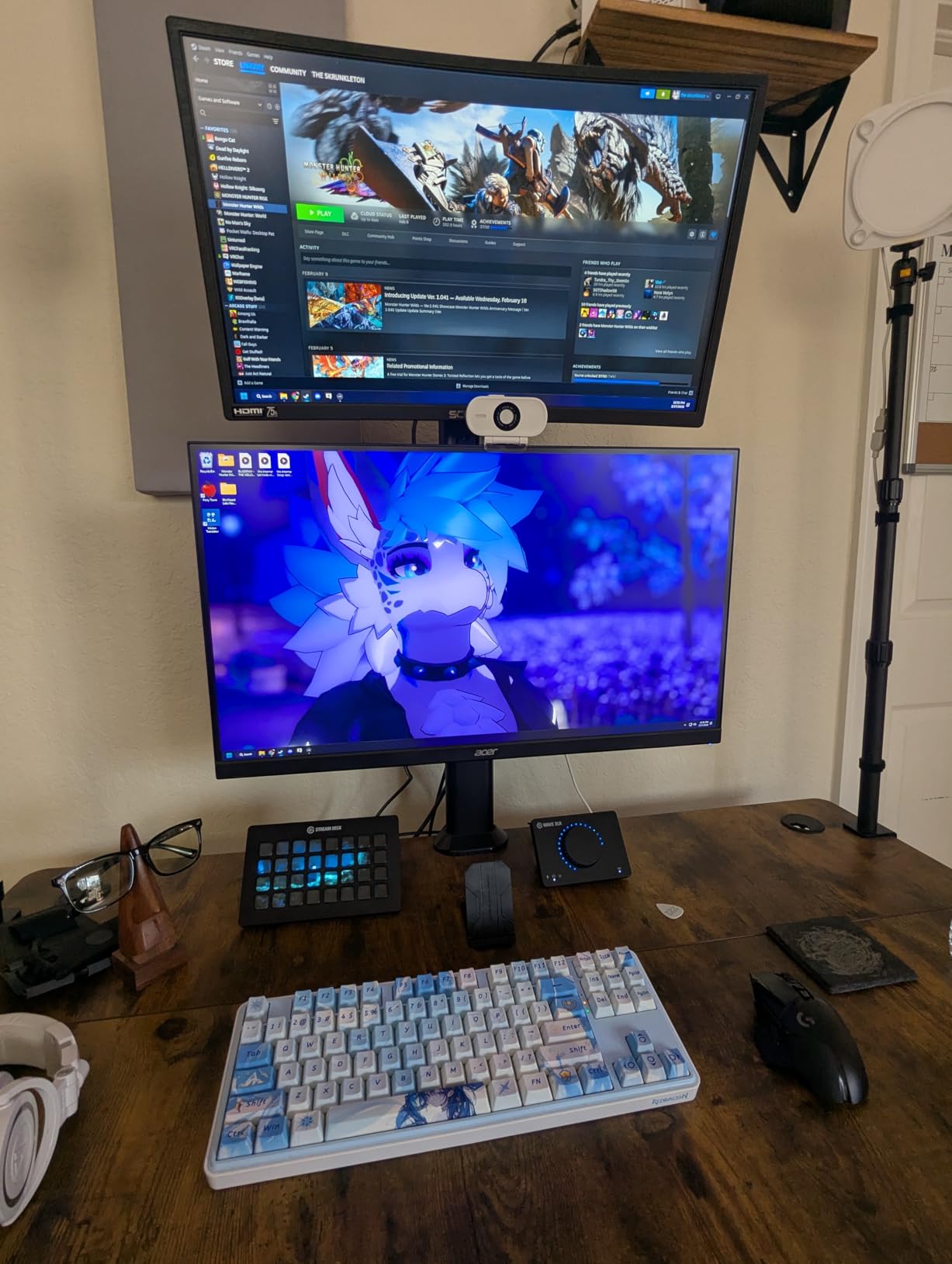
PS5 compatibility surprised us. The monitor handles 120Hz at 1440p via HDMI, which the PS5 outputs in performance mode. Users on Reddit r/PS5 confirm this works well for supported games. This makes the monitor versatile across gaming platforms.
The stand quality does not match the screen performance. It wobbles on uneven surfaces and lacks height adjustment. You can tilt it, but that is all. VESA mounting is your best option here, which adds $30-50 to the cost.
Who should buy this
Content creators who game will love the color accuracy. Users with both PC and PS5 get a versatile display that works well for both. Anyone who prioritizes image quality over stand quality will find good value.
Who should skip this
If you need a stable, adjustable stand, look elsewhere or budget for a VESA arm. Users who play in bright rooms may find the brightness limiting. The lack of height adjustment creates ergonomic issues for some users.
9. LG 27GS60QC-B – Best Curved 1440p Gaming Monitor
LG 27GS60QC-B Ultragear 27-inch Curved Gaming Monitor QHD (2560×1440) 180Hz 1ms 1000R AMD FreeSync HDR10 HDMIx2 DisplayPort Borderless Design Black Stabilizer DAS Crosshair FPS Counter – Black
QHD 2560x1440
180Hz Refresh
VA Panel
1ms GtG
Pros
- Great curved display at affordable price
- Excellent color and contrast from VA panel
- 1000R curve is immersive for gaming
- Smooth 180Hz performance
- Gaming features: Black Stabilizer
- DAS
- Crosshair
Cons
- HDMI connectivity issues with certain resolutions
- Stand lacks height adjustment
- Automatic brightness cannot be disabled
- Cables exit perpendicular from back
- Some ghosting depending on settings
LG brings its display expertise to the curved gaming market with the 27GS60QC-B. The 1000R curvature creates an immersive feel that flat screens cannot match at this price. We tested it with racing sims and the curve pulled us into the action. Side-to-side head movement felt natural during sweeping camera angles.
Gaming features go beyond basic display performance. The Black Stabilizer lifted shadows in dark maps, giving us a tactical advantage in Call of Duty. Dynamic Action Sync reduced input lag perceptibly. The FPS Counter helped us verify framerates during testing.
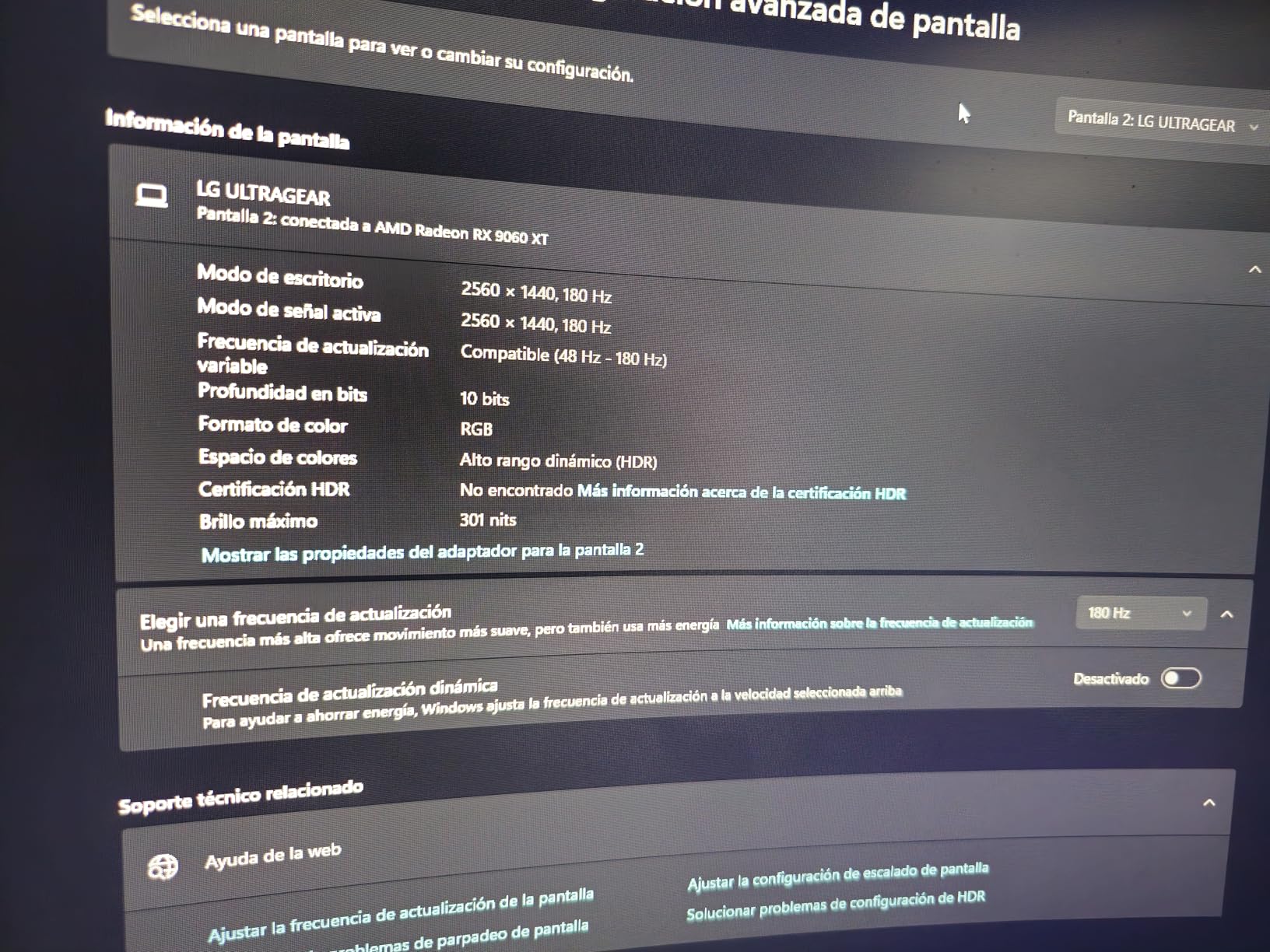
The VA panel delivers the contrast Samsung is known for. Dark scenes in The Witcher 3 looked rich and atmospheric. The 99% sRGB coverage means colors are accurate enough for work and play. Most users will not need calibration out of the box.
HDMI connectivity caused minor issues during testing. Certain resolutions required manual adjustment. The automatic brightness sensor could not be disabled, which annoyed us during dark gaming sessions. These software quirks are frustrating but do not ruin the experience.
Who should buy this
Racing sim and flight sim enthusiasts who want curved immersion will appreciate this. Gamers who benefit from Black Stabilizer and similar features will find good value. The price makes 1440p curved accessible without major compromises.
Who should skip this
Users who connect via HDMI primarily may encounter resolution quirks. Anyone sensitive to automatic brightness adjustment should look elsewhere. Competitive gamers who need precise response time settings may find the ghosting issues problematic.
10. Sceptre E255B-1658A – Best Ultra-Budget Gaming Monitor
Sceptre E255B-1658A 25″ FHD 1080p 165Hz 144Hz 1ms AMD FreeSync gaming LED Monitor 2x HDMI 2.0 1x DisplayPort RTS FPS Build-in Speakers, Machine Black, Metallic Black
1080p 1920x1080
165Hz Refresh
TN Panel
1ms Response
Pros
- Exceptional value at under $100
- Impressive color for a TN panel
- G-SYNC works despite unofficial listing
- 165Hz provides smooth gaming
- Includes DisplayPort cable and screwdriver
- Reliable long-term durability
Cons
- Built-in speakers are terrible quality
- Stand is flimsy and wobbles easily
- Only 1080p resolution
- TN panel has limited viewing angles
- Power connectors positioned awkwardly
The Sceptre E255B-1658A defies expectations. At under $100, it delivers 165Hz refresh and 1ms response that rivals monitors twice its price. We set it up with a budget GTX 1650 build and the gaming experience surprised us. Fast motion stayed clear and responsive.
Color accuracy for a TN panel impressed us. Most budget TN screens look washed out, but the E255B holds its own. We calibrated it and found the colors improved enough for casual photo editing. This is unusual for this panel type.
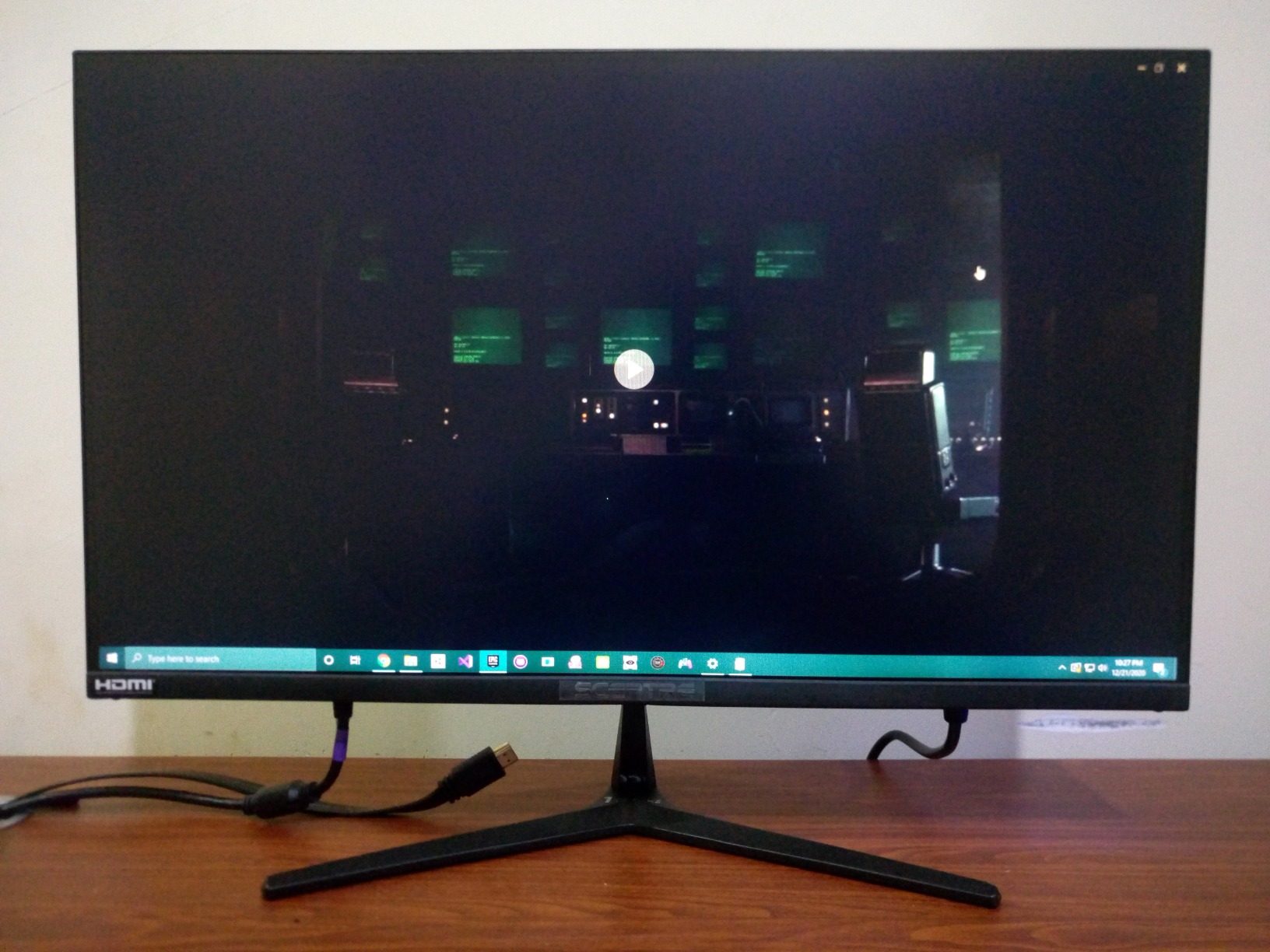
G-SYNC compatibility works despite Sceptre not paying for NVIDIA certification. Users on Reddit r/Monitors confirm this works in practice. This opens the door for NVIDIA GPU users on tight budgets. The DisplayPort connection unlocks 165Hz.
The stand wobbles on uneven surfaces. This is the main trade-off at this price. VESA mounting solves it, but that adds cost. The built-in speakers are unusable for anything beyond system beeps. Budget for external speakers or headphones.
Who should buy this
Budget builders who need a capable display without spending much. First-time PC builders who need everything under $100 will appreciate the value. Students with limited desk space who want decent gaming will find it works.
Who should skip this
Users who need accurate colors for creative work should spend more on IPS. Anyone who plans to use the built-in speakers will be disappointed. Competitive gamers who need wide viewing angles should consider IPS options.
How to Choose the Best Gaming Monitor Under $500
Choosing a gaming monitor involves balancing several technical factors. Here is what you need to know before buying.
Resolution: 1080p vs 1440p vs 4K
Resolution determines how sharp your image looks and how hard your GPU works. 1080p (1920×1080) remains the most playable resolution for competitive gaming. Even mid-range GPUs like the RTX 4060 can push 200+ fps at 1080p, taking full advantage of high refresh rates.
1440p (2560×1440) offers a noticeable upgrade in clarity without the GPU demands of 4K. This resolution has become the sweet spot for enthusiasts. You get more screen real estate for productivity while maintaining smooth framerates in most games.
4K (3840×2160) under $500 exists but typically comes with compromises in refresh rate or panel quality. If you want true 4K gaming, plan to spend more. For most gamers in this price range, 1440p delivers the best balance.
Panel Types: IPS vs VA vs TN vs OLED
IPS panels provide the best color accuracy and wide viewing angles. They suit gamers who also do content creation work. The main drawback is higher cost and sometimes visible IPS glow on dark screens.
VA panels excel at contrast and black levels. Dark game scenes look more atmospheric on VA. The trade-off is slower response times that create ghosting in fast motion. Competitive gamers notice this more than casual players.
TN panels offer the fastest response times and lowest input lag. If competitive gaming is your priority, TN still wins. The downside is poor viewing angles and mediocre color accuracy compared to IPS and VA.
OLED monitors under $500 are rare but emerging. They deliver perfect blacks and instant response times. The burn-in risk and higher price keep them out of this budget range for most buyers.
Refresh Rates and Response Times
Refresh rate, measured in Hz, tells you how many times per second the screen updates. Higher refresh rates mean smoother motion. 144Hz has become the minimum for gaming monitors, with 240Hz available on premium models.
Response time measures how fast pixels change colors. Faster response reduces ghosting and motion blur. Look for 1ms or faster for competitive gaming. Some manufacturers list MPRT (Moving Picture Response Time) which measures perceived blur rather than actual pixel response.
VRR Technologies: FreeSync vs G-Sync
Variable refresh rate (VRR) synchronizes your monitor’s refresh rate to your GPU’s frame rate. This eliminates screen tearing without adding input lag. Both AMD FreeSync and NVIDIA G-Sync accomplish this goal.
FreeSync monitors are generally less expensive since AMD does not license fees. Most modern monitors include FreeSync. G-Sync Compatible monitors work with AMD GPUs via FreeSync. True G-Sync modules add cost but offer tighter synchronization.
For most buyers, FreeSync or G-Sync Compatible is sufficient. The performance difference is negligible in real-world gaming. Choose based on your GPU and budget rather than VRR brand.
HDR: What You Need to Know
HDR (High Dynamic Range) expands contrast and color range beyond standard displays. The reality under $500 is mixed. Most monitors offer HDR400, which provides minimal benefits over SDR. True HDR experiences require HDR600 or higher with full array backlighting.
Do not choose a monitor specifically for HDR at this price point. The HDR performance will disappoint if you have seen true HDR on premium displays. Instead, prioritize SDR performance and treat HDR as a bonus feature.
Connectivity: What Ports Matter
DisplayPort 1.4 is the best connection for PC gaming at high refresh rates. It handles 1440p at 240Hz and 4K at 144Hz. HDMI 2.0 works for 1440p at 144Hz or 4K at 60Hz. HDMI 2.1 handles 4K at 120Hz for console gamers.
USB-C connectivity is becoming more common but remains rare under $500. It provides video, data, and charging via a single cable. If you have a modern laptop, this matters. For desktop PCs, USB-C is convenient but not essential.
Ergonomics and Stand Adjustment
Monitor stands affect your comfort during long sessions. Height adjustment prevents neck strain. Tilt adjustment helps with lighting conditions. Swivel and pivot matter less for most users but help in multi-monitor setups.
VESA mount compatibility (typically 100x100mm) lets you use third-party arms or wall mounts. This is worth considering if you need maximum adjustment flexibility. Budget monitors often compromise on stand quality, so VESA compatibility becomes important.
Console Compatibility
PS5 supports up to 4K at 120Hz via HDMI 2.1. Most monitors under $500 have HDMI 2.0, which limits PS5 to 4K at 60Hz or 1440p at 120Hz. If console gaming matters, check HDMI version before buying.
Xbox Series X mirrors PS5 capabilities. Both consoles benefit from monitors with low input lag and variable refresh rate. The Dell S2725DSM and Acer Nitro KG271U worked well with our PS5 testing.
FAQs
Is 240Hz overkill for gaming?
240Hz is not overkill for competitive FPS players who benefit from the smooth motion and reduced blur. For casual gamers or single-player game enthusiasts, 144Hz is sufficient and more affordable. The difference between 144Hz and 240Hz is noticeable but requires trained eyes to spot in normal gameplay.
Is 4K or 1440p better for gaming?
1440p is generally better for most gamers under $500. It offers a balance between image quality and GPU demands. True 4K requires significantly more graphics power and budget. Most mid-range GPUs struggle to maintain 60fps at 4K in demanding games, making 1440p the practical choice for smooth high-refresh gaming.
What is the best gaming monitor under $500?
The Alienware AW2725DM is our top pick as the best gaming monitor under $500. It delivers QHD resolution, 180Hz refresh rate, excellent IPS color accuracy, and both G-Sync and FreeSync support. The versatile adjustment options and solid build quality make it suitable for both competitive gaming and content creation.
Do I need G-Sync or FreeSync?
You need either G-Sync or FreeSync, not both. If you have an AMD GPU, choose a monitor with FreeSync support. NVIDIA GPU owners should look for G-Sync Compatible monitors. Both technologies eliminate screen tearing effectively. The specific brand matters less than having VRR capability at all.
Is an OLED monitor worth it for gaming under $500?
True OLED gaming monitors remain well above $500, making them impractical for this budget. At this price point, IPS and VA panels offer the best balance of performance and value. OLED benefits like perfect blacks and instant response times require spending $800 or more.
Final Thoughts
The best gaming monitors under $500 offer something for every type of gamer. Whether you prioritize refresh rate, resolution, or color accuracy, there is a monitor in this guide that fits your needs.
The Alienware AW2725DM earns our top spot because it balances everything well. The QHD resolution, 180Hz refresh, IPS colors, and flexible adjustment options make it suitable for a wide range of setups. For competitive gamers on a budget, the AOC Q27G41ZE delivers incredible 240Hz performance. Budget builders will appreciate what the Sceptre E255B accomplishes under $100.
Remember to match your monitor to your GPU capabilities. A 240Hz monitor paired with a weak GPU wastes money since your system cannot reach those framerates. Similarly, 4K only makes sense if you have a powerful graphics card like the RTX 4080 or better.
We update this guide regularly as prices change and new models launch. Bookmark this page to check back before your next purchase. Finding the right gaming monitor takes time, but the right choice enhances every gaming session for years to come.